
Common Flooring Installation Mistakes in Newport Beach High-End Homes and How to Prevent Them
High-end homeowners in Newport Beach expect flooring that withstands coastal humidity, salt air, and heavy foot traffic without compromising on aesthetic precision. According to industry data, improper installation accounts for nearly 80% of all flooring failures, including warping, buckling, and premature wear. This statistic highlights why professional oversight is critical for luxury properties. When you invest in premium materials, the execution matters just as much as the product itself. This guide details the most frequent errors made during high-end flooring projects and provides actionable strategies to ensure your investment lasts.
Ignoring Climate Control and Acclimation
Newport Beach's unique coastal climate presents specific challenges for natural materials. Hardwood and engineered wood floors are hygroscopic, meaning they absorb and release moisture based on the surrounding environment. A common mistake is installing these materials without adequate acclimation time. If wood is installed before it reaches equilibrium with the home's interior humidity, it will inevitably expand or contract after installation.
High-end homes often feature large glass windows and open-concept layouts that amplify temperature fluctuations. Without proper climate control during and after installation, gaps may appear between planks, or crowns may form on the surface. To prevent this, ensure your installer monitors the subfloor and ambient humidity levels for at least 72 hours before installation. This process is critical for maintaining the integrity of your investment.
For more insights on maintaining your floors, explore our Flooring Restoration services, which often address issues stemming from improper initial installation.
Subfloor Preparation Errors
The longevity of any flooring system depends entirely on the stability of the subfloor. A prevalent error in luxury renovations is overlooking minor subfloor imperfections. Even a fraction of an inch of unevenness can lead to squeaking, hollow sounds, or cracked grout in tile installations. In high-end homes with radiant heating systems, this risk is amplified because thermal expansion can exacerbate any existing irregularities.
Professional installers must use a straightedge to check for flatness and levelness. If the subfloor is concrete, it must be properly cured and free of moisture vapor transmission. If it is wood-based, it must be securely fastened and free of deflection. Skipping these steps is a false economy that leads to costly repairs. We specialize in Floor Repair & Subfloor Prep to ensure a perfect foundation for your new floors.
Moisture Barrier Failures in Coastal Zones
Coastal homes are subject to higher ambient humidity and potential salt air intrusion. A critical mistake is the omission or improper installation of moisture barriers, especially when installing engineered wood or laminate over concrete slabs. Without a proper vapor retarder, moisture from the ground can wick up through the slab, causing adhesive failure, mold growth, and wood rot.
In Newport Beach, where the water table is relatively close to the surface, this risk is significant. For tile installations, waterproofing membranes are essential in wet areas like bathrooms and kitchens. Neglecting these layers compromises the entire flooring system. Our Tile Installation services include rigorous waterproofing protocols to protect your home from hidden moisture damage.
Expansion Gap Miscalculations
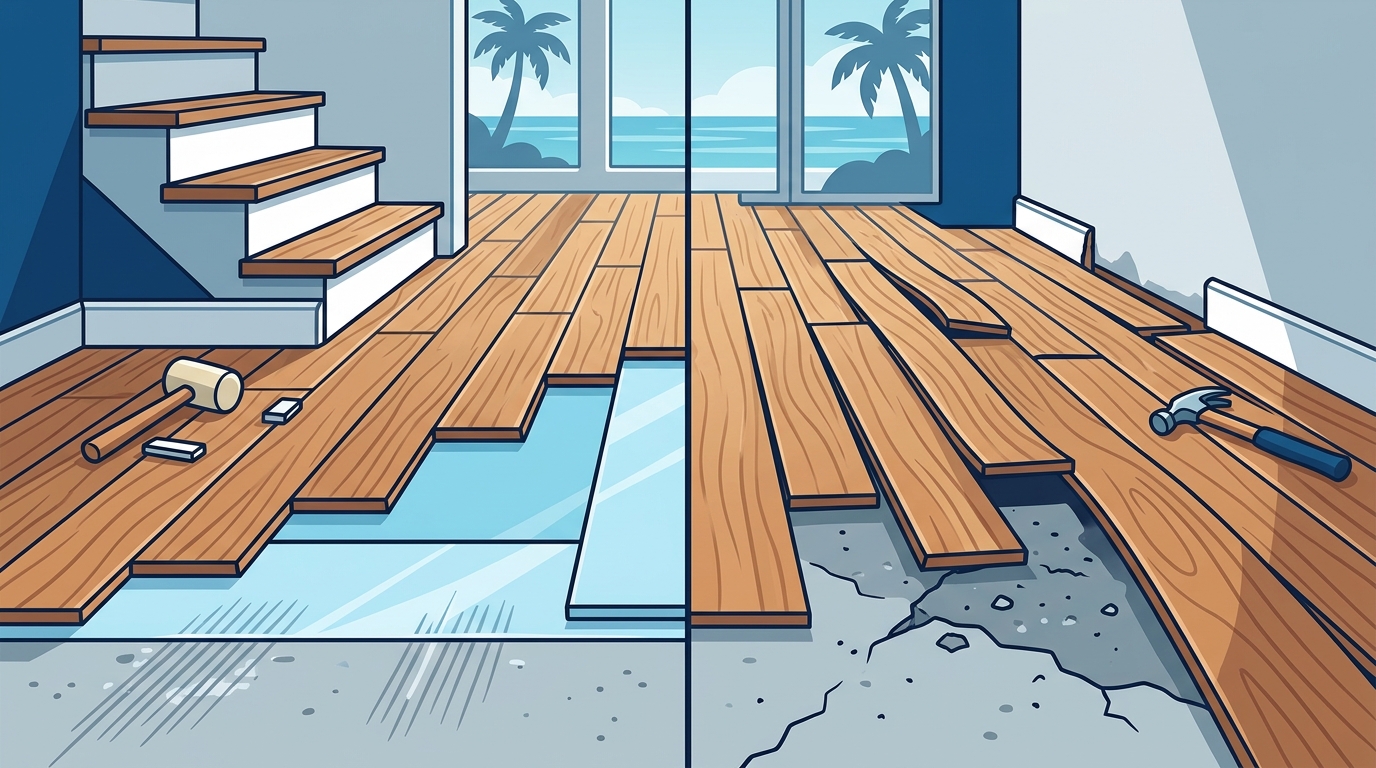
Natural materials need room to breathe. Expansion gaps are spaces left between the flooring and the walls to allow for natural movement due to humidity and temperature changes. A common error is installing flooring too tightly against baseboards or fixed objects. When the material expands, it has nowhere to go, resulting in buckling or cupping.
These gaps are typically hidden by baseboards or quarter-round molding, but they must be precise. In large rooms or long hallways, the cumulative expansion can be significant. Proper planning ensures that your floors remain flat and secure. For complex layouts, our Flooring Installation team calculates these gaps meticulously to prevent future structural issues.
Material Selection Mismatches
Choosing materials that do not suit the specific environment is a frequent oversight. For example, installing solid hardwood in a basement or a sunroom with extreme temperature swings can lead to rapid deterioration. Similarly, using porous natural stone in high-traffic wet areas without proper sealing can result in staining and etching.
High-end homeowners must consider not just aesthetics but also performance metrics. Engineered wood often performs better in coastal climates due to its layered construction, which resists warping. Porcelain tile is often a superior choice for wet areas due to its low water absorption rate. Understanding these nuances is key to long-term satisfaction. We also offer Kitchen Remodeling and Bathroom Remodeling services that integrate flooring choices with overall design goals.
Comparison of Installation Approaches
Understanding the differences between installation methods helps in making informed decisions. Below is a comparison of common approaches for high-end flooring:
| Method | Best For | Pros | Cons |
|---|---|---|---|
| Nail-Down | Hardwood over wood subfloors | Traditional, repairable, stable | Not for concrete, noisy if subfloor is weak |
| Glue-Down | Engineered wood over concrete | Stable, quiet, good for radiant heat | Difficult to replace, strong adhesive odor initially |
| Float | Laminate, luxury vinyl | Easy installation, forgiving subfloor | Can sound hollow, less durable than nailed/glued |
| Thin-Set Mortar | Tile, stone | Extremely durable, waterproof options | Permanent, requires skilled labor |
Key Takeaways
- Acclimation is Critical: Always allow materials to acclimate to the home's humidity for at least 72 hours before installation.
- Subfloor Flatness: Ensure the subfloor is level and flat to prevent squeaks and cracked grout in tile work.
- Moisture Protection: Use appropriate vapor barriers and waterproofing membranes, especially in coastal Newport Beach homes.
- Expansion Gaps: Leave adequate expansion gaps to prevent buckling due to natural material movement.
- Material Suitability: Choose materials that match the specific environmental conditions of the room, such as engineered wood for humidity-prone areas.
- Professional Oversight: Hire in-house teams with 15+ years of experience to avoid subcontractor errors.
- Warranty Coverage: Ensure your installer offers a workmanship warranty, such as the 5-year guarantee provided by Divinity.
Frequently Asked Questions
How long should wood floors acclimate before installation?
Wood floors should typically acclimate for at least 72 hours in the room where they will be installed. This allows the material to adjust to the home's temperature and humidity levels, preventing future warping or gapping.
Can I install hardwood flooring over concrete in Newport Beach?
Yes, but it requires a glue-down method or a floating installation with a proper moisture barrier. Solid nail-down hardwood is not suitable for concrete subfloors due to the risk of moisture damage.
What is the best flooring for coastal homes?
Engineered wood and porcelain tile are often the best choices for coastal homes. Engineered wood is more stable in humidity, while porcelain tile is highly resistant to water and salt air corrosion.
Why do my floors squeak after installation?
Squeaking is usually caused by a loose subfloor or inadequate fastening during installation. It can also result from gaps between the subfloor and the joists. Proper subfloor preparation is the key to preventing this issue.
How often should I reseal natural stone flooring?
Natural stone flooring should be resealed every 1 to 3 years, depending on traffic and exposure. Regular sealing protects the stone from stains and moisture penetration, preserving its appearance and integrity.
Do you use subcontractors for flooring installation?
No, Divinity Flooring Services uses an in-house team for all installations. This ensures consistent quality, accountability, and adherence to our high standards for every project.
What is included in a free consultation?
A free consultation includes an in-home assessment, material recommendations, and a detailed written estimate. There is no obligation, and the estimate covers all labor and material costs.
Schedule Your Consultation
Avoid costly mistakes by partnering with a trusted local expert. Divinity Flooring Services has been serving Newport Beach and Orange County since 2010 with a commitment to quality and integrity. Our in-house team ensures every project is completed to the highest standards. Contact us today to schedule your free in-home consultation and protect your investment.
Contact Divinity Flooring Services to get started.