
Common Hardwood Flooring Installation Mistakes in Orange County and How to Avoid Them
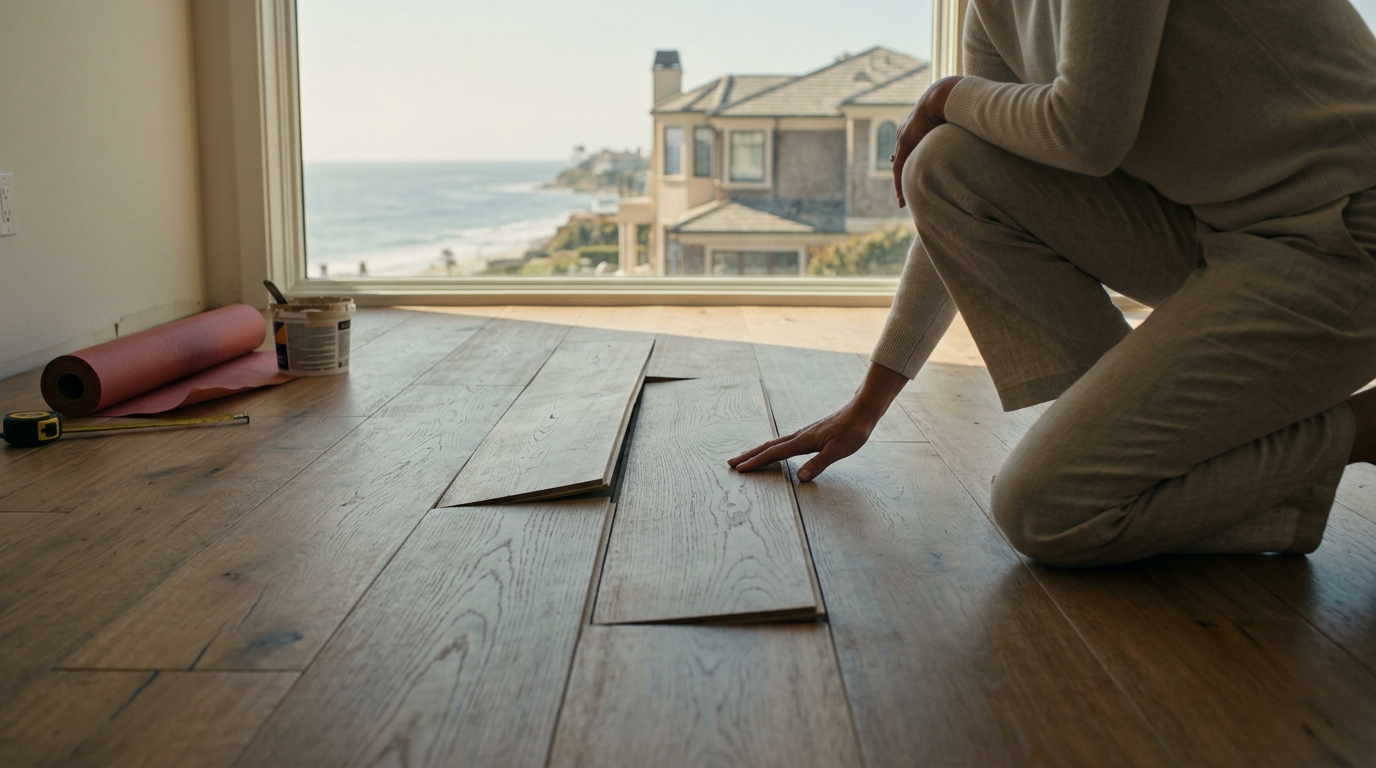
Orange County's unique coastal climate creates specific challenges for hardwood flooring that many homeowners overlook until it is too late. Humidity levels in Huntington Beach and Newport Beach can fluctuate significantly, causing wood to expand and contract if not properly acclimated. According to the U.S. Department of Energy, maintaining indoor humidity between 30% and 50% is critical for wood stability, yet many OC homes fail to meet this standard during seasonal shifts. This article details the most frequent installation errors and provides expert strategies to protect your investment.
The Critical Role of Acclimation
One of the most devastating mistakes homeowners make is skipping the acclimation process. Hardwood is a natural material that absorbs and releases moisture from its environment. If you install wood that has not adjusted to your home's specific humidity levels, it will shift after installation.
Acclimation is the process of allowing wood flooring to adjust to the temperature and humidity of the installation environment. In Orange County, this is particularly important because coastal areas have higher humidity than inland cities like Irvine or Santa Ana. We recommend leaving the boxes open in the room where they will be installed for at least 3 to 5 days before installation. This ensures the wood reaches equilibrium with your home's climate.
At Divinity Flooring Services, we monitor humidity levels using professional hygrometers to ensure the wood is ready. Skipping this step can lead to cupping, where the edges of the planks rise higher than the center, or gapping, where spaces appear between the boards.
Ignoring Subfloor Preparation
A beautiful floor is only as good as the surface it sits on. Many DIYers and even some inexperienced contractors skip the crucial step of subfloor leveling. An uneven subfloor can cause hollow sounds, squeaks, and eventually, broken planks.
Subfloor preparation involves ensuring the base layer is flat, clean, and structurally sound before any flooring is laid. For concrete slabs common in many OC homes, this means checking for moisture and leveling any dips or humps. For wooden subfloors, it means securing any loose boards and sanding down high spots.
Our team at Divinity Floor Repair & Subfloor Prep specializes in this foundational work. We use a straightedge to check for flatness, ensuring no more than a 3/16-inch deviation over a 10-foot radius. This attention to detail prevents future headaches and ensures your hardwood lasts for decades.
Moisture Barriers and Vapor Retarders
Orange County's proximity to the Pacific Ocean means that moisture is always a potential threat. Installing hardwood directly over concrete without a proper vapor barrier is a common and costly mistake. Moisture from the ground can wick up through the concrete and damage the wood.
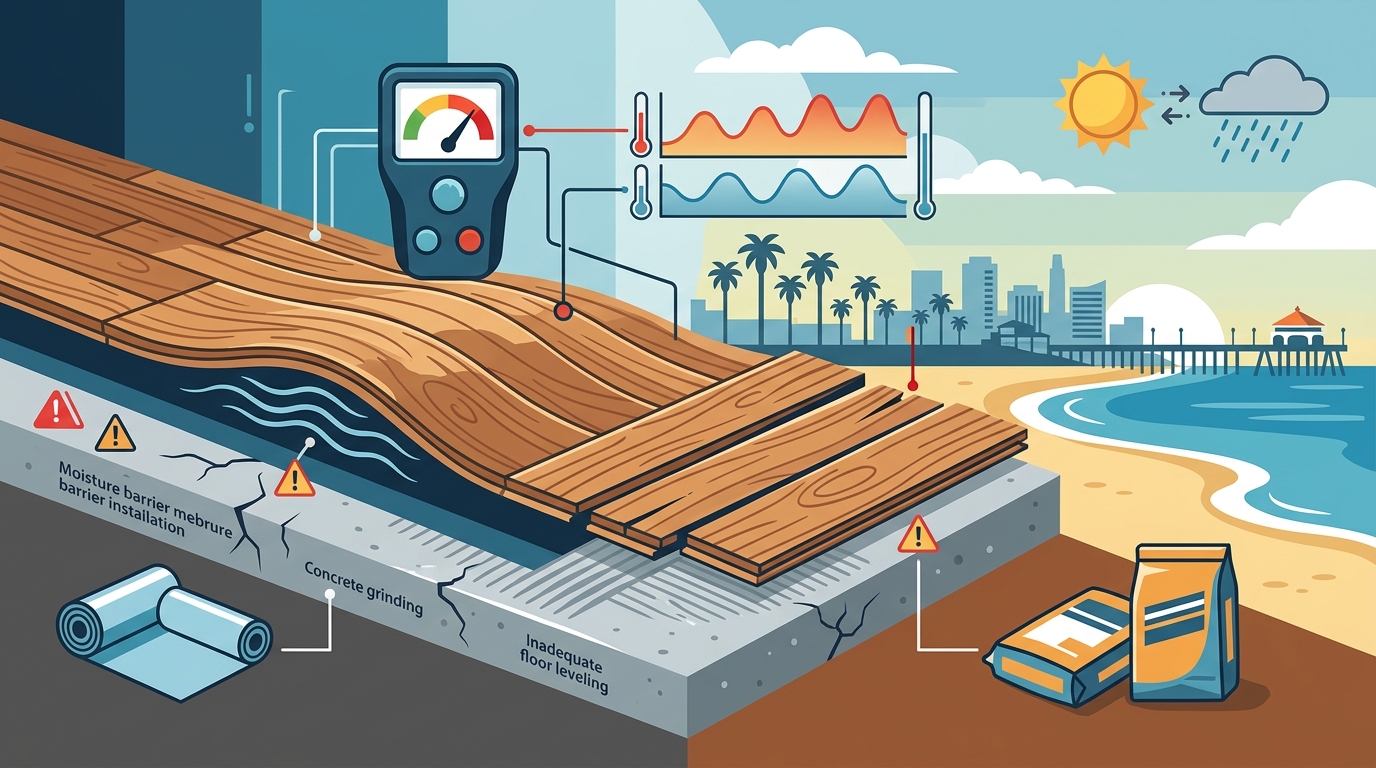
A vapor retarder is a layer of material installed between the subfloor and the flooring to prevent moisture transmission. For concrete slabs, we typically use a 6-mil polyethylene sheet or a specialized moisture-absorbing underlayment. This barrier protects your investment from warping and mold growth.
If you are unsure about the moisture levels in your home, contact us for a professional assessment. We can perform a calcium chloride test or a relative humidity test to determine the correct moisture mitigation strategy for your specific location.
Neglecting Expansion Gaps
Wood expands when it absorbs moisture and contracts when it dries. If you install hardwood planks tightly against the walls with no room to move, the floor will buckle as it expands. This is known as "tenting," and it is one of the most dramatic failures in flooring installation.
Expansion gaps are small spaces left between the flooring and the walls to allow for natural movement. Typically, these gaps are about 1/4 inch wide and are covered by baseboards or quarter-round molding. In Orange County, where humidity can spike during winter storms, these gaps are essential for preventing damage.
Our installers use spacers to ensure consistent expansion gaps around the entire perimeter of the room. This simple step is often overlooked by amateurs but is critical for the longevity of your floor. Learn more about our flooring installation process to see how we handle these details.
Using the Right Tools and Techniques
Installing hardwood requires specialized tools that most homeowners do not own. Using a standard nail gun or improper adhesive can lead to poor adhesion, loose boards, and visible nail heads. Professional installers use pneumatic nailers, moisture meters, and precision saws to ensure a flawless finish.
Professional tools ensure precision, speed, and a higher quality finish than DIY alternatives. For example, a pneumatic nailer drives nails at the correct depth and angle, reducing the risk of splitting the wood. A moisture meter helps us verify the wood's condition in real-time, allowing us to make adjustments on the fly.
At Divinity Flooring Services, we bring all the necessary equipment to your home. Our team is trained in the latest installation techniques, including floating floors, glue-down, and staple-down methods, depending on your specific needs. We also offer flooring restoration services if you need to repair existing damage.
Hardwood vs. Alternatives in OC
While hardwood is a classic choice, it is not always the best option for every room in an Orange County home. Bathrooms and basements, for example, are prone to moisture issues that can damage hardwood. In these areas, tile or luxury vinyl plank (LVP) might be a better choice.
| Material | Best For | OC Climate Suitability | Maintenance Level |
|---|---|---|---|
| Hardwood | Living rooms, bedrooms | High (with acclimation) | Medium |
| Tile | Bathrooms, kitchens | Very High | Low |
| LVP | Basements, sunrooms | Very High | Low |
| Engineered Wood | Over concrete slabs | High | Medium |
If you are considering a full remodel, we also specialize in kitchen remodeling and bathroom remodeling to ensure your flooring complements your overall design.
Key Takeaways
- Acclimation is non-negotiable: Always allow wood to adjust to your home's humidity for 3-5 days before installation.
- Subfloor flatness matters: Ensure no more than a 3/16-inch deviation over 10 feet to prevent squeaks and damage.
- Moisture barriers are essential: Use vapor retarders over concrete slabs to prevent warping and mold.
- Leave expansion gaps: Maintain a 1/4-inch gap around walls to allow for natural wood movement.
- Professional tools ensure quality: Use pneumatic nailers and moisture meters for a precise and durable installation.
- Choose the right material: Consider tile or LVP for high-moisture areas like bathrooms and basements.
- Trust local expertise: Orange County's climate requires specific knowledge to avoid costly mistakes.
Frequently Asked Questions
How long should hardwood flooring acclimate in Orange County?
Hardwood should acclimate for at least 3 to 5 days in the room where it will be installed. This allows the wood to adjust to the local humidity and temperature, preventing future expansion or contraction issues.
Can I install hardwood over a concrete slab in Huntington Beach?
Yes, but you must use a proper moisture barrier and engineered wood or a specific glue-down hardwood. Solid hardwood is not recommended for direct concrete installation due to moisture risks.
What is the difference between solid and engineered hardwood?
Solid hardwood is made from a single piece of wood and is best for above-grade installations. Engineered hardwood has multiple layers and is more stable, making it suitable for basements and over concrete slabs.
How do I prevent squeaks in my new hardwood floor?
Squeaks are often caused by an uneven subfloor or loose nails. Proper subfloor preparation and using the correct installation technique, such as gluing or stapling, can prevent this issue.
Is hardwood flooring suitable for Orange County's coastal climate?
Yes, hardwood is suitable if properly acclimated and maintained. However, you must monitor indoor humidity levels and use moisture barriers to protect against coastal dampness.
What maintenance does hardwood flooring require?
Regular sweeping, occasional damp mopping with a wood-safe cleaner, and using felt pads under furniture legs are essential. Avoid excessive water and direct sunlight to prevent fading and warping.
How long does a hardwood floor installation take?
A typical installation takes 3 to 5 days, depending on the size of the area and the complexity of the design. Acclimation time is not included in this estimate.
Start Your Project
Avoid these common mistakes by partnering with a trusted local expert. Divinity Flooring Services has over 15 years of experience transforming homes across Orange County. We provide free in-home consultations and detailed estimates to ensure your project starts on the right foot. Contact us today to schedule your appointment and protect your home with professional craftsmanship.