
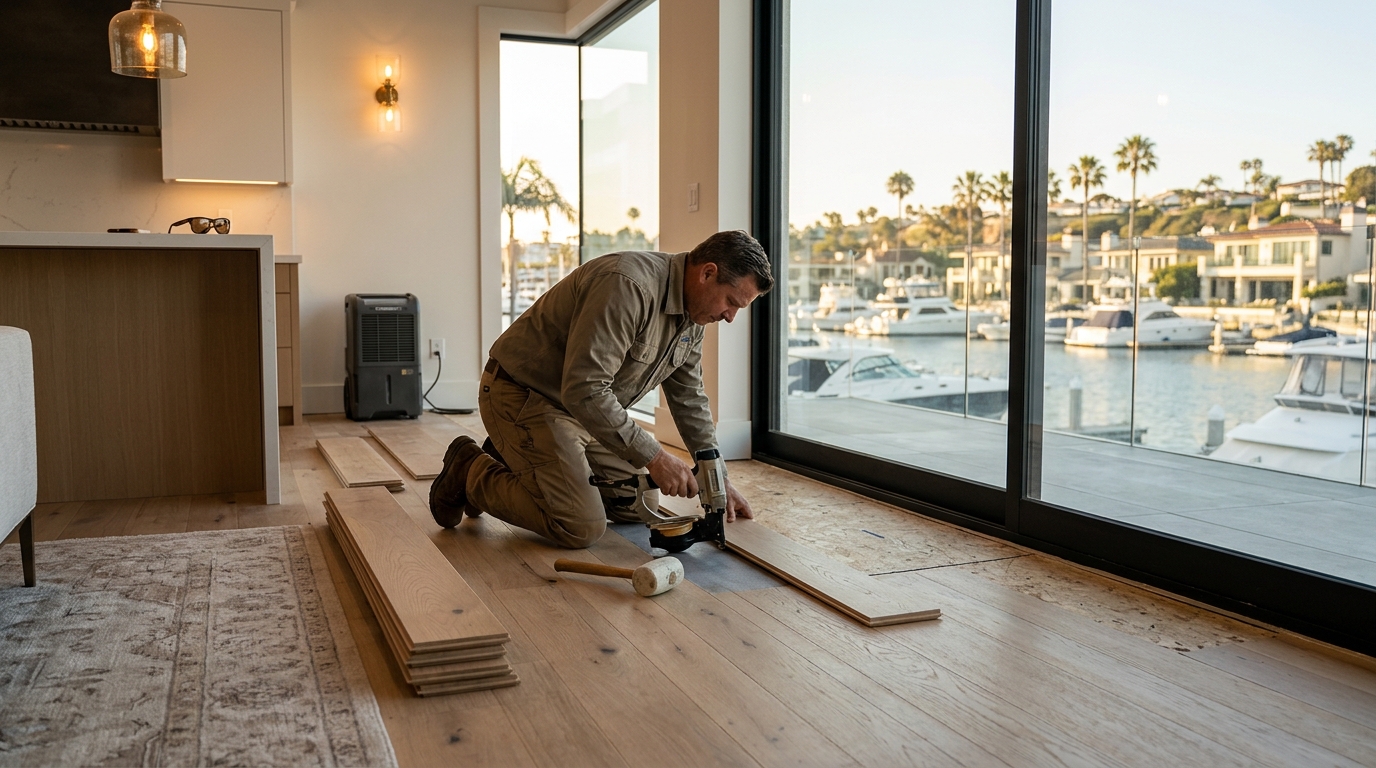
Common Flooring Installation Mistakes in Newport Beach and How to Avoid Them
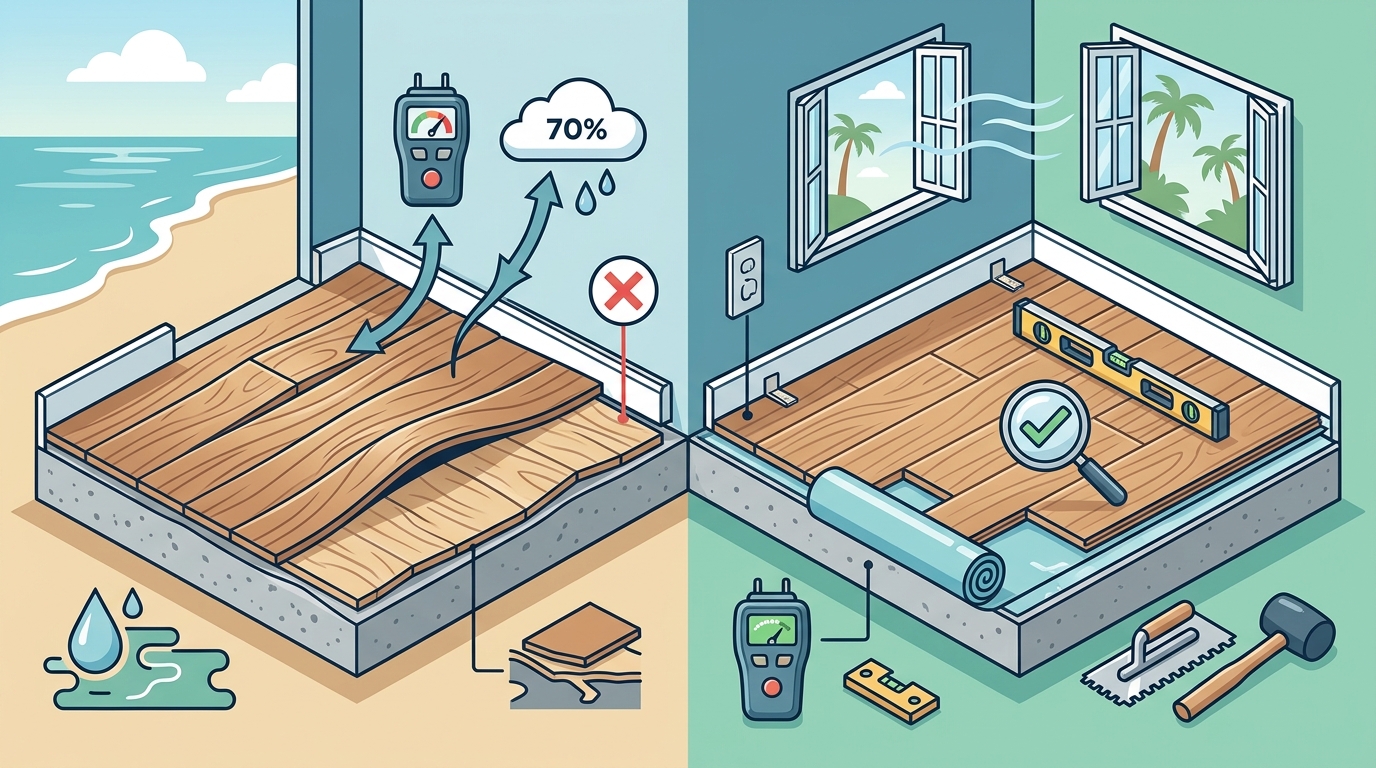
Homeowners in Newport Beach face unique environmental challenges that directly impact flooring longevity. According to the National Weather Service, coastal humidity levels frequently exceed 70 percent, creating conditions that can warp standard wood and laminate if not properly acclimated. Ignoring these local climate factors often leads to costly repairs, buckling subfloors, and premature material failure. This guide outlines the most frequent installation errors and provides the professional strategies needed to protect your investment. (Contact 8211 divinityoc com)
Ignoring Material Acclimation
One of the most critical steps in any flooring project is allowing materials to adjust to the indoor environment before installation. The National Wood Flooring Association states that hardwood must acclimate to the home's specific temperature and humidity levels for at least three days. In Newport Beach, the marine layer can cause significant fluctuations in moisture content. If you skip this step, the wood will expand or contract after installation, leading to gaps or cupping.
Divinity Flooring Services ensures every plank is properly conditioned before laying it down. This process prevents the structural stress that causes boards to lift or separate over time. Proper acclimation is not optional; it is the foundation of a stable floor.
Skipping Subfloor Preparation
A beautiful floor cannot be built on a flawed base. Many DIYers and rushed contractors skip the crucial step of leveling and cleaning the subfloor. According to the International Concrete Repair Institute, uneven subfloors are the primary cause of tile cracking and laminate failure. Even a minor dip of 1/8th of an inch can cause hollow spots underfoot and eventual breakage.
Our team at Divinity performs rigorous subfloor prep, including moisture testing and leveling. This ensures a flat, stable surface that supports the weight and movement of your new flooring. Professional floor repair and subfloor preparation are essential services that prevent future headaches.
Neglecting Expansion Gaps
Materials like hardwood and luxury vinyl plank (LVP) expand and contract with temperature changes. If you install these materials too tightly against the walls, they have nowhere to go. This pressure causes the floor to buckle upward, creating a dangerous trip hazard and ruining the aesthetic. Architectural Record highlights that proper expansion gaps are mandatory for all floating floors.
We use precise spacers during installation to maintain the correct gap around the perimeter. Baseboards and quarter-round molding are then used to cover this gap, hiding it while allowing the floor to breathe. This technique ensures the floor remains flat and secure for years.
Using Incorrect Adhesives
Tile and stone installations rely heavily on the quality of the adhesive. Using a standard thin-set mortar for a heavy natural stone or a wet area like a shower will lead to immediate failure. The Tile Council of North America specifies that different tiles require specific adhesive types based on porosity and weight. Newport Beach's coastal salt air can also accelerate corrosion if the wrong materials are used.
Divinity selects adhesives based on the specific tile material and the room's humidity. For example, we use epoxy grout in high-moisture areas to prevent mold and staining. This attention to detail ensures that your tile installation remains intact and beautiful despite the harsh coastal environment.
Overlooking Waterproofing
Water damage is the enemy of any flooring installation. In bathrooms and kitchens, failing to install a proper waterproofing membrane under tile can lead to rot in the subfloor and drywall. According to the U.S. Geological Survey, humidity and water intrusion are leading causes of structural damage in coastal homes. Even a small leak can compromise the integrity of the entire floor system.
We implement rigorous waterproofing protocols in all wet areas. This includes using cement backer boards and liquid waterproofing membranes before laying tile. This step protects your home from hidden water damage and ensures the longevity of your renovation. Professional bathroom remodeling always includes these critical protective layers.
Key Takeaways
- Acclimation is Critical: Allow hardwood to adjust to indoor humidity for at least 72 hours before installation to prevent warping.
- Subfloor Leveling: Ensure the subfloor is flat within 1/8th of an inch to prevent tile cracking and laminate failure.
- Expansion Gaps: Always leave a 1/4-inch gap around the perimeter to allow for natural material expansion and contraction.
- Correct Adhesives: Match the adhesive type to the tile material and room humidity to ensure long-term bond strength.
- Waterproofing: Install waterproof membranes in all wet areas to protect the subfloor from hidden moisture damage.
- In-House Expertise: Divinity Flooring Services uses an in-house team with 15+ years of experience to ensure quality control.
- Local Knowledge: Understanding Newport Beach's coastal climate is essential for selecting the right materials and installation methods.
Frequently Asked Questions
How long should hardwood floors acclimate in Newport Beach?
Hardwood floors should acclimate for at least 72 hours, but often longer depending on the humidity levels. We monitor the moisture content of the wood and the subfloor to ensure they are balanced before installation.
Can I install luxury vinyl plank (LVP) over existing tile?
Yes, LVP can be installed over existing tile if the surface is perfectly flat and clean. However, any unevenness in the tile grout lines can telegraph through the new floor. We recommend leveling the surface first for the best result.
What is the best flooring for Newport Beach's coastal climate?
Porcelain tile and luxury vinyl plank are excellent choices for coastal homes due to their resistance to humidity and salt air. Both materials are stable and do not expand or contract significantly with temperature changes.
How do you prevent tile from cracking after installation?
Tile cracking is usually caused by an uneven subfloor or lack of expansion joints. We ensure the subfloor is level and use appropriate grout and adhesive to allow for minor movement without breaking the tile.
Does Divinity Flooring Services offer a warranty?
Yes, we provide a 5-year workmanship warranty on all our installations. This covers any issues related to the installation process, giving you peace of mind and long-term protection for your home.
What is the difference between thin-set and epoxy grout?
Thin-set mortar is a standard cement-based adhesive used for most tiles. Epoxy grout is a stronger, more water-resistant alternative used in high-moisture areas like showers. It is less likely to stain or grow mold, making it ideal for Newport Beach's humid climate.
How do I choose the right flooring for my kitchen?
Consider durability, water resistance, and comfort underfoot. Porcelain tile and luxury vinyl are top choices for kitchens due to their resistance to spills and heavy traffic. We can help you select the best material based on your lifestyle and design preferences.
Transform Your Home with Expert Flooring Installation
Avoid the costly mistakes that plague many DIY flooring projects. Trust Divinity Flooring Services to deliver precision, quality, and lasting results. Our in-house team brings 15+ years of experience to every Newport Beach home. Contact us today to schedule your free in-home consultation and get a detailed estimate for your project.