
Common Flooring Contractor Mistakes in Orange County and How to Avoid Them
Orange County’s real estate market is one of the most dynamic in California, with home values and renovation budgets fluctuating significantly based on coastal proximity and school district ratings. According to recent market data from the California Association of Realtors, the median home price in Orange County has consistently remained above $900,000, driving homeowners to invest heavily in high-impact renovations like flooring. However, a significant percentage of these projects suffer from avoidable errors due to poor contractor selection or inadequate project management. This guide details the critical pitfalls that plague local flooring installations and provides the strategic framework needed to ensure your investment yields lasting value and aesthetic perfection.
Understanding Subfloor Preparation Errors
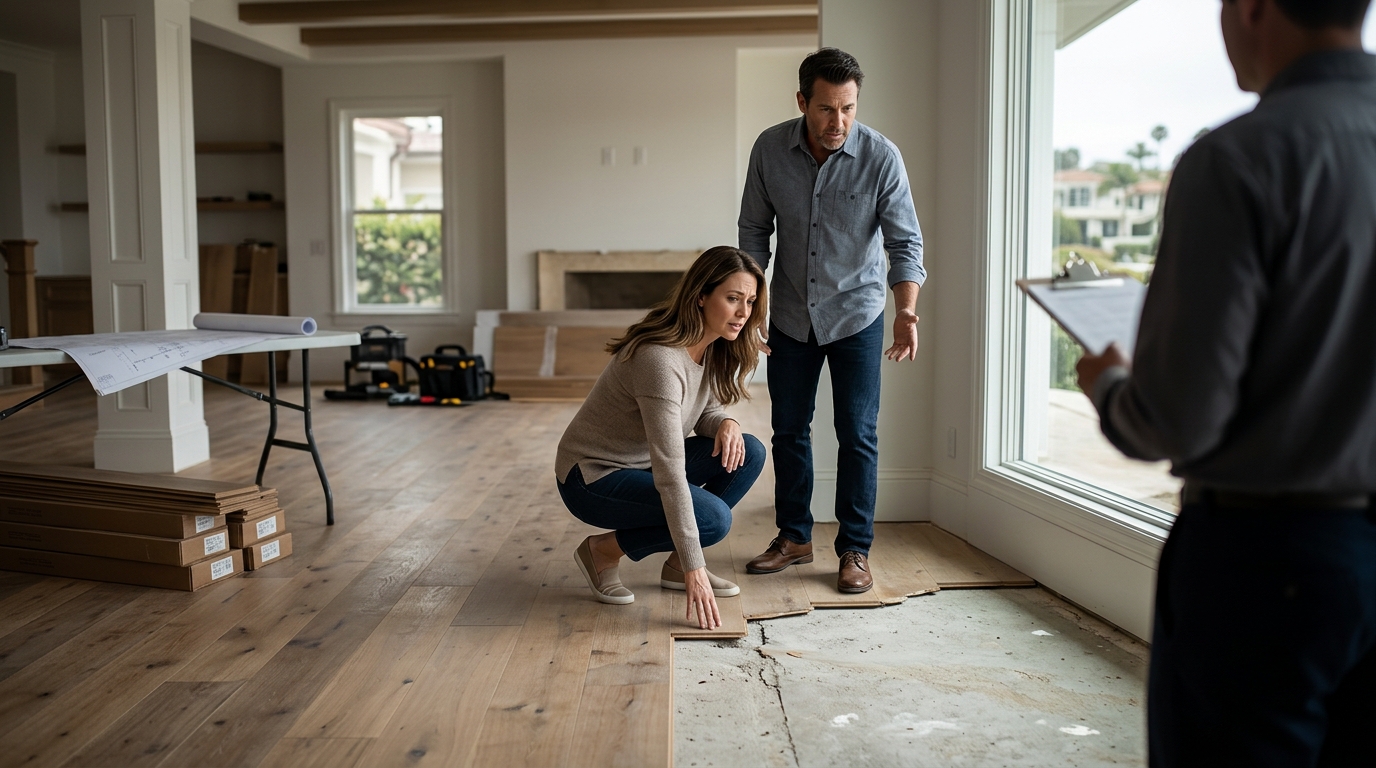
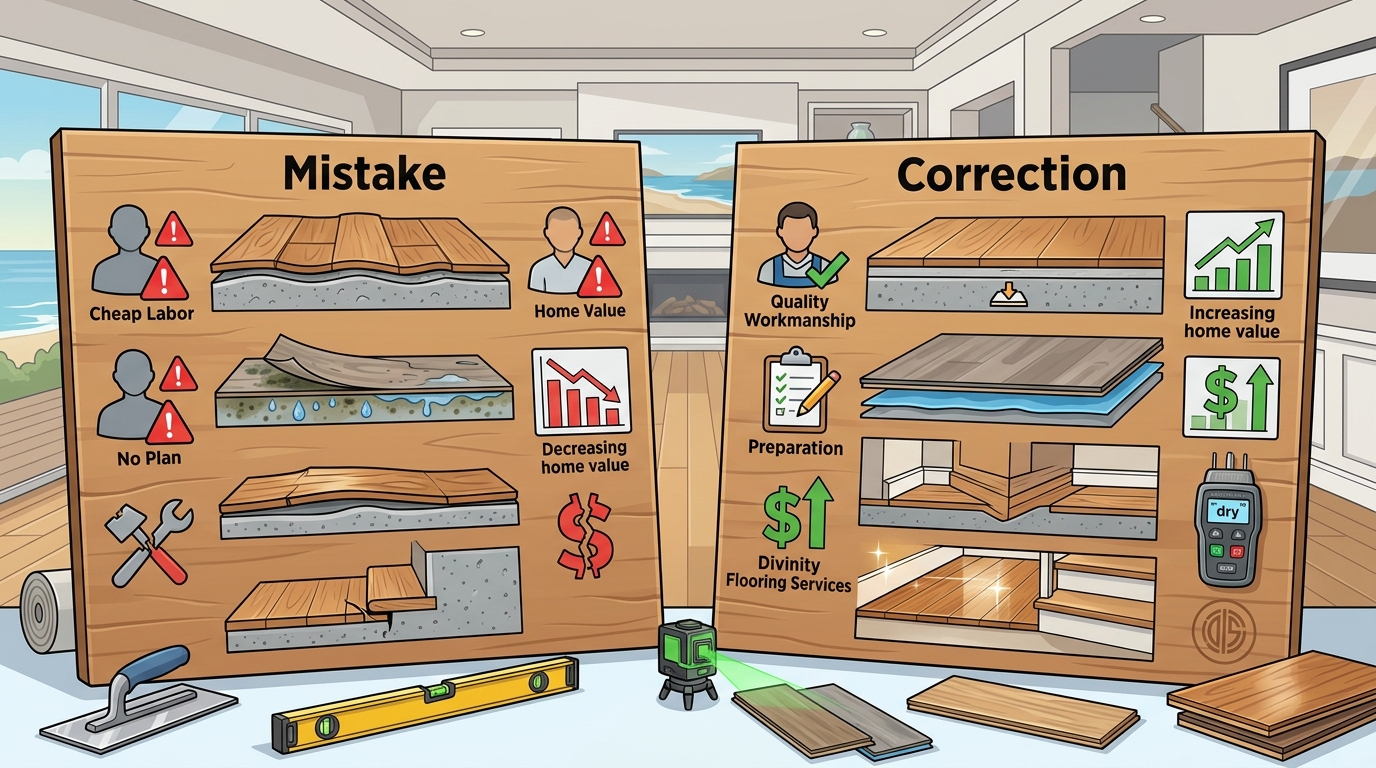
The foundation of any successful flooring installation lies in the subfloor. Many homeowners in Irvine, Newport Beach, and Anaheim underestimate the complexity of this step. A common mistake is proceeding with installation without a thorough moisture test or level check. Subfloor preparation is the critical process of ensuring the underlying surface is clean, dry, and level before any finish material is applied. If this step is rushed, you risk cupping, gapping, or complete delamination of your new floors within months.
In Orange County, older homes often have wooden subfloors that may have settled over decades. Newer constructions might have concrete slabs that retain moisture from the soil. Ignoring these structural realities leads to catastrophic failures. Professional contractors use moisture meters to detect hidden dampness. They also employ laser levels to identify dips or humps that exceed industry tolerances. By addressing these issues early, you prevent costly repairs down the line. For more insights on structural integrity, you can review guidelines from the National Wood Flooring Association regarding subfloor requirements.
Ignoring Climate Control and Acclimation
Orange County’s coastal climate presents unique challenges for natural materials. The humidity levels near the ocean can fluctuate daily, affecting how wood and bamboo expand and contract. A frequent error is failing to allow materials to acclimate to the home’s specific environment before installation. Acclimation is the process of allowing flooring materials to adjust to the temperature and humidity of the installation site to prevent future movement. Without this waiting period, hardwood floors may warp or develop gaps as they seek equilibrium with the indoor air.
Contractors who rush this process often blame the material for defects that were actually caused by improper handling. Homeowners should ensure their HVAC systems are running and set to normal living conditions during the acclimation period. This typically requires 3 to 5 days for solid hardwood and up to 7 days for engineered options. Understanding these environmental factors is crucial for longevity. You can learn more about humidity impacts on wood from the Engineered Wood Association.
Material Selection Mismatches for OC Homes
Selecting the wrong material for the wrong room is a costly mistake. While luxury vinyl plank (LVP) has gained popularity for its durability, some homeowners mistakenly install it in high-moisture areas without proper underlayment. Conversely, installing solid hardwood in a basement or sunroom without considering UV exposure can lead to rapid fading and warping. Material selection mismatch occurs when the chosen flooring type is incompatible with the room’s environmental conditions or usage patterns.
For coastal homes in Huntington Beach or Laguna Beach, salt air can accelerate corrosion on metal fixtures and affect certain finishes. In inland areas like Santa Ana, higher temperatures may cause expansion in synthetic materials. It is essential to consult with experts who understand these regional nuances. The U.S. Green Building Council provides valuable resources on sustainable material choices that perform well in diverse climates.
Contractor Verification and Licensing
One of the most dangerous mistakes homeowners make is hiring unlicensed or uninsured contractors. In California, it is illegal to perform flooring installation work that costs $500 or more for labor and materials without a valid contractor’s license. Contractor verification is the process of confirming a professional’s license status, insurance coverage, and bonding history before signing a contract. Failing to do so leaves homeowners liable for injuries or property damage that occur on their premises.
Always check the contractor’s license number on the Contractors State License Board (CSLB) website. This ensures they are legally permitted to work in Orange County and have passed necessary exams. Additionally, request proof of general liability insurance and workers’ compensation coverage. This protection is vital for your financial security. For more information on protecting yourself from contractor fraud, refer to the CSLB’s consumer protection resources.
Comparison of Flooring Options
Choosing the right flooring involves balancing aesthetics, durability, and budget. Below is a comparison of common options available in Orange County.
| Material Type | Durability | Maintenance Level | Best For | Avg. Cost per Sq Ft |
|---|---|---|---|---|
| Solid Hardwood | High | Moderate | Living Rooms, Bedrooms | $8 - $14 |
| Engineered Wood | Medium-High | Low | Basements, Coastal Areas | $6 - $12 |
| Luxury Vinyl Plank (LVP) | Very High | Very Low | Kitchens, Bathrooms | $3 - $8 |
| Porcelain Tile | High | Low | Entryways, Patios | $5 - $15 |
Each material offers distinct advantages. Hardwood provides timeless elegance but requires regular refinishing. Engineered wood offers stability in varying humidity. LVP is waterproof and highly durable. Tile is impervious to water and fire. Understanding these differences helps you make an informed decision. The National Association of Home Builders offers detailed comparisons of material performance.
Key Takeaways
- Subfloor preparation is the critical process of ensuring the underlying surface is clean, dry, and level before any finish material is applied.
- Acclimation is the process of allowing flooring materials to adjust to the temperature and humidity of the installation site to prevent future movement.
- Material selection mismatch occurs when the chosen flooring type is incompatible with the room’s environmental conditions or usage patterns.
- Contractor verification is the process of confirming a professional’s license status, insurance coverage, and bonding history before signing a contract.
- Orange County’s coastal humidity requires specific acclimation periods for natural materials to prevent warping.
- Always verify contractor licenses on the CSLB website to avoid legal and financial liabilities.
- Luxury Vinyl Plank (LVP) is increasingly popular in Orange County for its water resistance and durability in high-traffic areas.
Frequently Asked Questions
How long does hardwood need to acclimate in Orange County?
Typically, solid hardwood requires 3 to 5 days of acclimation in the home before installation. Engineered wood may need up to 7 days. The HVAC system should be running at normal living conditions during this time.
What is the most durable flooring for coastal homes?
Luxury Vinyl Plank (LVP) and porcelain tile are the most durable options for coastal homes due to their resistance to humidity and salt air. Solid hardwood requires more maintenance in these environments.
Do I need a licensed contractor for flooring in Orange County?
Yes, California law requires a licensed contractor for any flooring job costing $500 or more for labor and materials. Unlicensed work can void warranties and insurance coverage.
How can I prevent gaps in my new hardwood floors?
Proper acclimation and consistent indoor humidity levels are key. Use a humidifier in winter and a dehumidifier in summer to maintain stable conditions. Professional installation also ensures proper expansion gaps are left.
What is the average cost of flooring installation in Orange County?
Costs vary by material, but generally range from $3 to $15 per square foot for materials and installation. Complex subfloor repairs or custom patterns can increase the total price significantly.
Can I install flooring over existing tile?
It is possible to install LVP or engineered wood over existing tile if the surface is level and clean. However, adding height can affect door clearance and appliance fit, so professional assessment is recommended.
How do I choose between solid and engineered wood?
Solid wood is best for above-grade installations where you want to refinish floors multiple times. Engineered wood is more stable and suitable for basements or concrete slabs where moisture is a concern.
Schedule Your Consultation
Avoid the common pitfalls that plague Orange County flooring projects by partnering with a trusted expert. Divinity offers comprehensive flooring solutions tailored to the unique needs of OC homes. From initial material selection to final installation, we ensure every step is executed with precision. Contact Divinity today to schedule your free consultation and protect your investment with professional-grade care.