
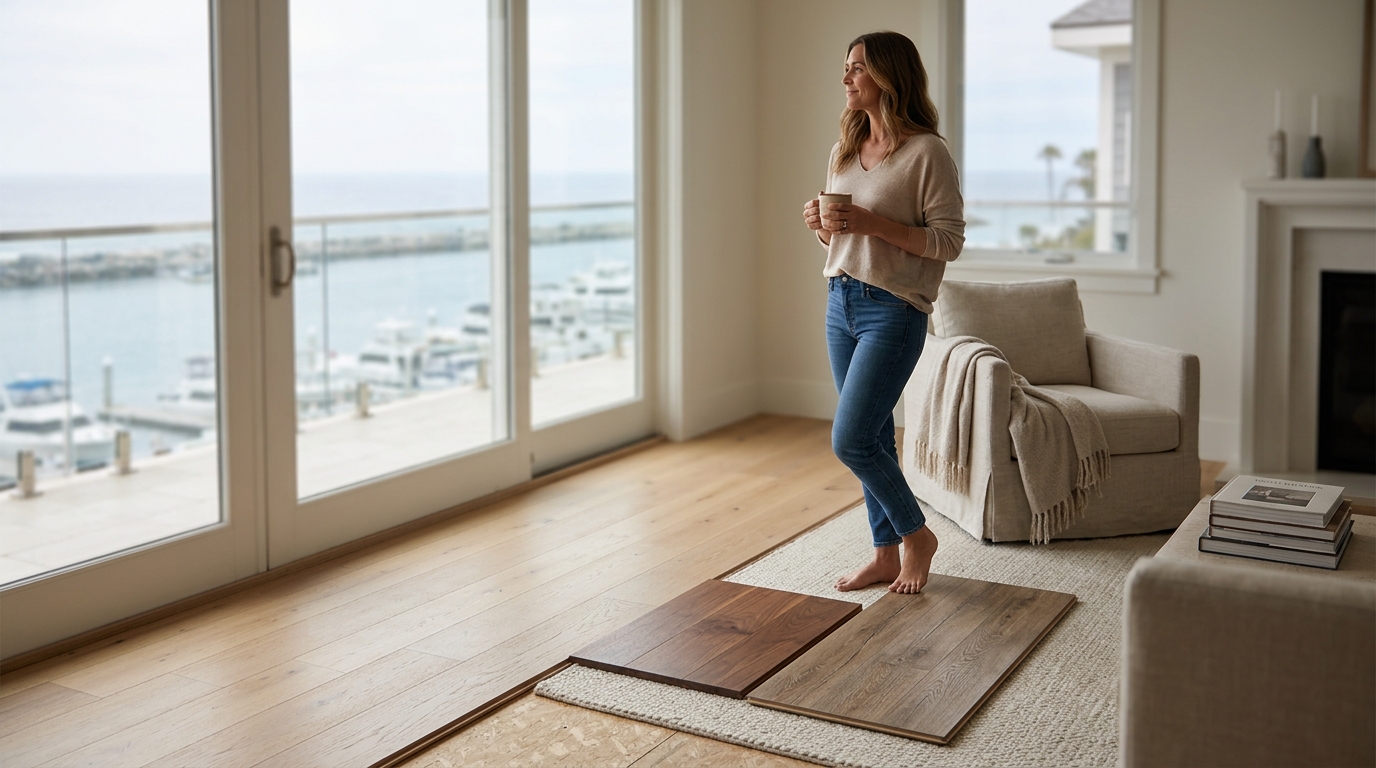
Engineered hardwood is a multi-layer flooring product that offers superior dimensional stability compared to solid wood, making it ideal for Newport Beach's coastal humidity. While solid hardwood provides a classic aesthetic and laminate offers budget-friendly durability, engineered wood balances moisture resistance with the authentic look of real wood. This comparison helps homeowners select the right material for their specific living spaces.
Moisture Resistance and Coastal Climate Suitability
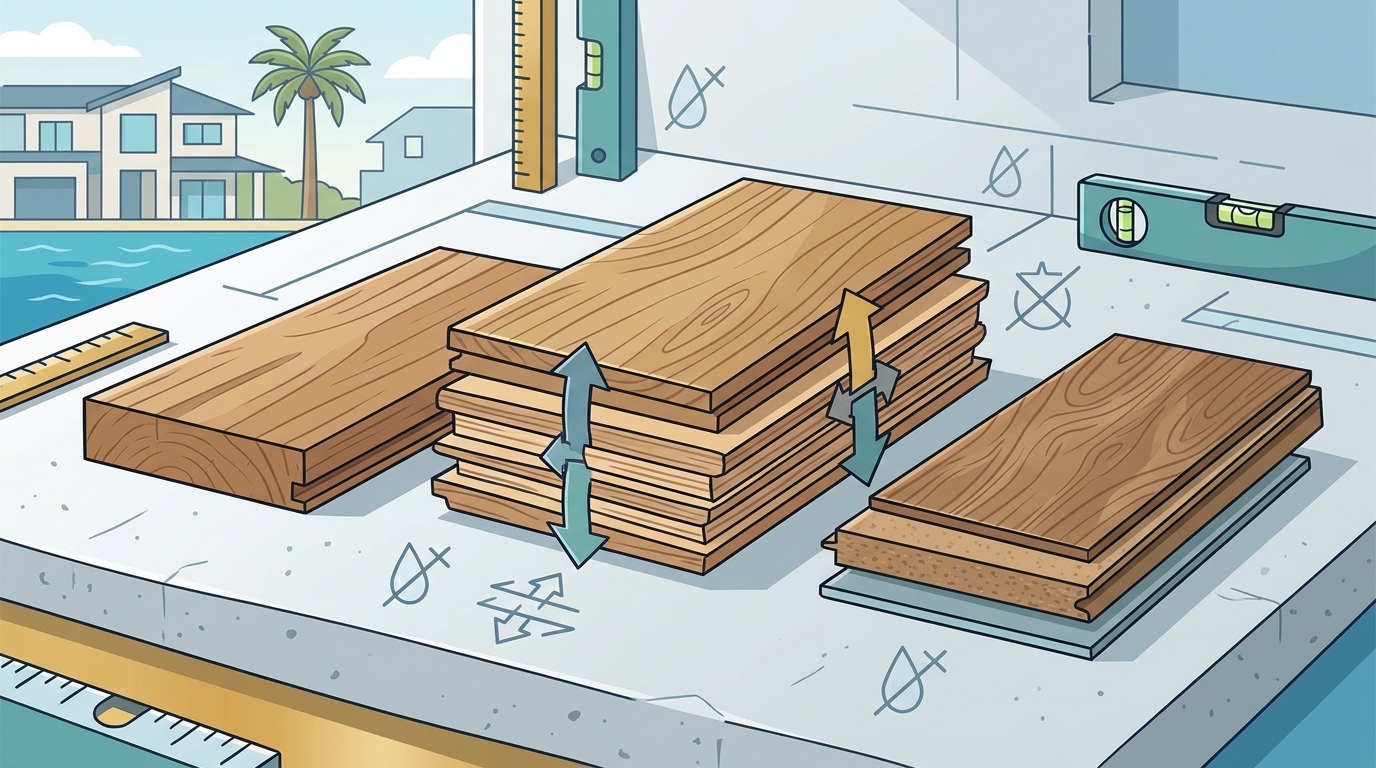
Newport Beach experiences significant humidity fluctuations due to its proximity to the Pacific Ocean. Solid hardwood is a single piece of wood that expands and contracts with moisture changes, which can lead to warping or cupping in coastal environments. Engineered hardwood is constructed with a cross-ply core that resists these dimensional changes, making it far more stable in high-humidity areas. Laminate flooring is a synthetic product that is highly resistant to moisture but lacks the natural wood grain depth of real timber.
For homes with basements or ground-level living spaces, engineered wood is often the preferred choice over solid wood. The layered structure prevents the floor from reacting to moisture vapor rising from the subfloor. Homeowners in Newport Beach should consider this stability when choosing between the three options for their primary living areas.
Aesthetic Appeal and Authenticity of Grain
The visual difference between these materials is distinct. Solid hardwood is milled from a single log, providing a continuous grain pattern that cannot be replicated by other materials. Engineered hardwood features a real wood veneer on top, typically ranging from 2mm to 6mm in thickness, which offers a similar look to solid wood. Laminate flooring uses high-resolution photographic images of wood, which can look realistic but lacks the tactile depth and natural variation of real timber.
When selecting flooring, the thickness of the veneer on engineered wood matters. A thicker veneer allows for more refinishing cycles, extending the floor's lifespan. For homeowners who prioritize the authentic feel and smell of real wood, both solid and engineered options outperform laminate. The choice often comes down to whether the visual authenticity of the top layer is worth the premium over synthetic alternatives.
Installation Methods and Subfloor Requirements
Installation complexity varies significantly among these three types. Solid hardwood is typically nailed or stapled to a wood subfloor, requiring specific fastening methods. Engineered hardwood is more versatile and can be nailed, glued, or floated over various subfloor types, including concrete. Laminate flooring is almost exclusively installed using a floating method, where the planks click together and rest on an underlayment.
For Newport Beach homes with concrete slab foundations, engineered hardwood and laminate are the primary viable options. Solid hardwood generally requires a wood subfloor, which may necessitate additional preparation work. The flexibility of engineered wood installation makes it a strong candidate for whole-home replacements where subfloor conditions vary from room to room.
Longevity, Refinishing, and Maintenance
Longevity depends on the material's ability to be restored. Solid hardwood can be sanded and refinished multiple times over its lifespan, potentially lasting decades. Engineered hardwood can also be refinished, but the number of times depends on the thickness of the top wood layer. Laminate flooring cannot be refinished; once the top layer is worn or damaged, the plank must be replaced.
Maintenance requirements are similar for all three, involving regular sweeping and damp mopping. However, the repairability of damaged planks differs. With solid and engineered wood, individual planks can often be replaced if damaged. With laminate, replacing a single plank can be difficult if the locking mechanism is damaged. For long-term value, the refinishing capability of real wood products is a significant advantage over synthetic alternatives.
Cost Considerations and Value Proposition
Price is a major factor in flooring decisions. Laminate flooring is generally the most affordable option, offering a wood-like appearance at a lower cost. Solid hardwood is typically the most expensive due to the material cost of solid timber and the labor required for installation. Engineered hardwood falls in the middle, offering a balance of cost and performance.
The total cost includes material, installation, and subfloor preparation. While laminate has a lower upfront cost, its shorter lifespan and inability to be refinished may result in higher long-term expenses. Engineered hardwood provides a durable, real-wood surface that can be refinished, offering better long-term value than laminate for many homeowners. Understanding these cost dynamics helps in budgeting for a flooring project in Newport Beach.
Key Takeaways
- Engineered hardwood is more stable than solid wood in Newport Beach's humid coastal climate.
- Solid hardwood offers the most authentic grain and the highest potential for refinishing.
- Laminate flooring is the most budget-friendly option but cannot be refinished or repaired easily.
- Engineered wood can be installed over concrete slabs, making it suitable for many local homes.
- The thickness of the engineered wood veneer determines how many times the floor can be refinished.
- Long-term value often favors real wood products due to their durability and refinishing capabilities.
Frequently Asked Questions
Is engineered hardwood waterproof?
Engineered hardwood is moisture-resistant but not waterproof. The cross-ply core resists swelling, but prolonged exposure to standing water can still damage the wood veneer and core. It is significantly more stable than solid hardwood in humid conditions.
Can I install engineered hardwood over concrete in Newport Beach?
Yes, engineered hardwood can be installed over concrete slabs using glue-down or floating methods. This makes it a suitable option for homes with concrete foundations, unlike solid hardwood which typically requires a wood subfloor.
How many times can engineered hardwood be refinished?
The number of refinishing cycles depends on the thickness of the top wood veneer. A 2mm veneer may allow for one or two refinishing cycles, while a 6mm veneer can be refinished multiple times. Always check the manufacturer's specifications.
Which flooring is best for high-traffic areas?
Both engineered hardwood and laminate are suitable for high-traffic areas. Engineered wood offers the durability of real wood with better stability, while laminate offers high scratch resistance at a lower cost. The choice depends on budget and aesthetic preference.
Does Divinity Flooring Services install engineered hardwood in Newport Beach?
Yes, Divinity Flooring Services provides professional installation of engineered hardwood, solid hardwood, and laminate flooring throughout Newport Beach and Orange County. Our team handles subfloor preparation and precision installation to ensure a durable finish.
Conclusion
Selecting the right flooring for a Newport Beach home requires balancing aesthetics, durability, and climate suitability. Engineered hardwood offers a compelling middle ground, providing the look of real wood with the stability needed for coastal living. For homeowners seeking the best long-term value and performance, consulting with a local expert is essential. Contact Divinity Flooring Services to schedule a consultation and discuss your flooring options.