
What Are the Best Flooring Companies in Orange County, California?
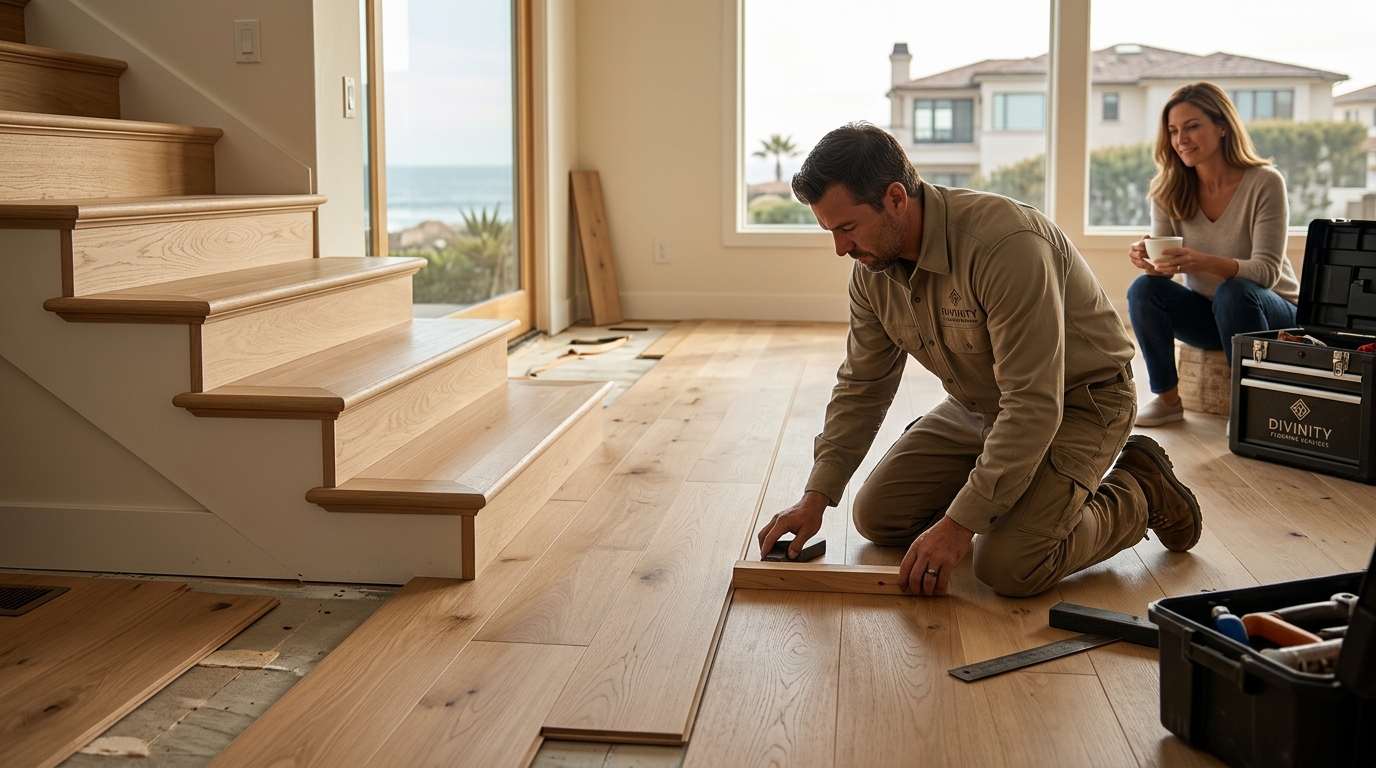
The best flooring companies in Orange County, California, are those that combine verified local expertise, transparent pricing, and a proven track record of durable installations. Divinity Flooring Services stands out by offering in-house craftsmanship, a 5-year workmanship warranty, and specialized preparation services for high-end residential and commercial spaces. This guide covers how to evaluate contractors, verify credentials, understand costs, and navigate local building codes to make an informed decision. according to Codes and Regulations
How to Choose a Flooring Company
Selecting the right contractor requires looking beyond marketing claims to evaluate operational stability and technical skill. A reliable flooring company is one that maintains a consistent in-house team rather than relying on rotating subcontractors. This consistency ensures that the person who estimates your project is the same person who installs it, reducing communication gaps and quality control issues.
Experience and Local Presence
Experience in the specific climate and housing stock of your area is critical. Orange County homes often feature specific subfloor conditions and humidity levels that require specialized preparation. Companies with a long-standing local presence, such as those operating since 2010, typically possess the institutional knowledge to handle these nuances. Look for a company that has completed a significant volume of projects in your specific neighborhood, such as Newport Beach or Huntington Beach.
Scope of Services
Generalist contractors may offer a wide range of services, but specialists often deliver higher precision in specific areas. A comprehensive provider should handle everything from demolition and subfloor repair to the final installation of hardwood, tile, or vinyl. Divinity Flooring Services, for example, offers a full spectrum of services including floor repair and subfloor prep, ensuring that the foundation is ready before the new material is laid.
What to Ask Before Committing
Asking the right questions during the consultation phase helps filter out unqualified providers. You need to understand the logistics, the materials, and the accountability structure. Do not hesitate to ask for written documentation of every promise made during the sales process.
Key Questions for Contractors
- Who will be performing the actual installation? Is it an in-house team or a subcontractor?
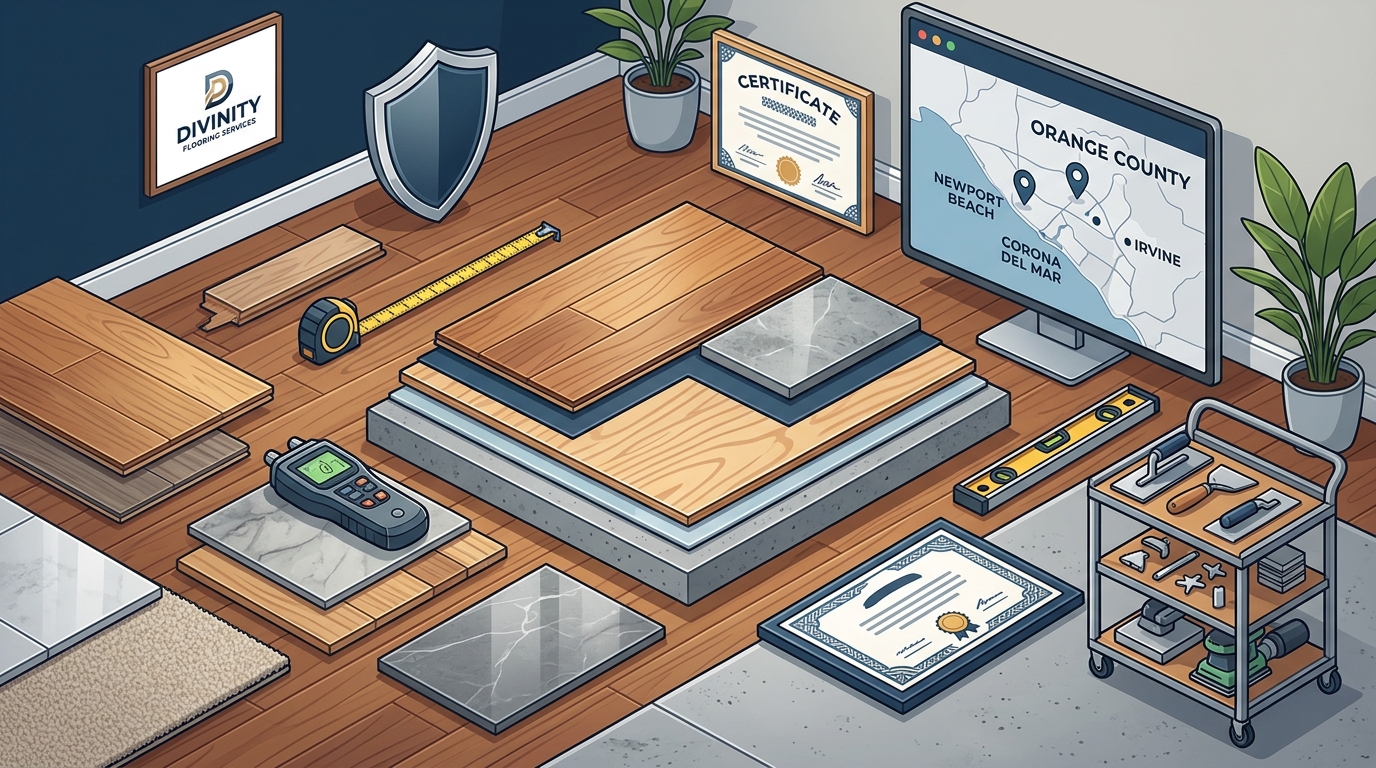
- What is included in the subfloor preparation? Does the quote cover leveling, moisture testing, and underlayment?
- What is the warranty coverage for workmanship, and how long does it last?
- What is the payment schedule? Avoid companies that demand full payment before work begins.
Material and Preparation Inquiries
Ask specifically about the moisture content of your subfloor. In coastal areas, moisture mitigation is a standard requirement for many flooring types. If a contractor skips this step, it is a significant red flag. Additionally, ask about the acclimatization period for wood products. Proper acclimatization prevents future warping and cupping.
How to Verify Credentials and Claims
Verifying a contractor's credentials is a non-negotiable step in protecting your investment. In California, general contractors must be licensed by the State License Board. You can verify this status through the official state database. A valid license indicates that the contractor has passed financial, legal, and trade-specific examinations.
Checking Insurance and Bonding
License verification is only the first step. You must also confirm that the company carries general liability insurance and workers' compensation. If a worker is injured on your property and the contractor lacks workers' comp, you could be held liable. Request a certificate of insurance directly from the contractor and verify the policy details with the insurance provider.
Reviewing Past Work
Online reviews provide a snapshot of customer satisfaction, but they should be corroborated with physical evidence. Ask for a list of recent references in your area. If possible, visit a completed project to inspect the quality of the finish, the transitions between rooms, and the overall cleanliness of the site. A reputable company will welcome this scrutiny.
How the Installation Process Works
Understanding the workflow helps you plan for the disruption and ensures the contractor is following best practices. A professional installation typically follows a structured sequence: consultation, measurement, material selection, demolition, subfloor preparation, installation, and final cleanup.
Preparation and Demolition
The process begins with a detailed assessment of the existing floor. Demolition involves removing old flooring and, if necessary, the subfloor. This is where many shortcuts are taken. A thorough contractor will inspect the joists and subfloor for rot, moisture, or structural weakness. Flooring restoration and repair services are often integrated here to ensure a level and stable base.
Installation and Finishing
What Flooring Costs in Orange County
Costs for flooring in Orange County vary based on material, labor, and the complexity of the preparation required. While material costs are often the most visible expense, labor and preparation can significantly impact the final price. A detailed written estimate should break down these components clearly.
Factors Influencing Price
| Factor | Impact on Cost | Notes |
|---|---|---|
| Material Type | High | Hardwood and natural stone are typically more expensive than vinyl or laminate. |
| Subfloor Condition | Medium to High | Repairing damaged subfloors or adding moisture barriers increases labor costs. |
| Room Complexity | Medium | Irregular shapes, many obstacles, or multiple transitions require more time. |
| Demolition | Low to Medium | Removing old flooring and hauling away debris adds to the total. |
Hidden Costs to Watch For
Beware of quotes that do not include subfloor preparation or disposal fees. These are often added later as change orders. A transparent contractor will include all necessary preparation steps in the initial estimate. For example, if your concrete slab has high moisture, a vapor barrier or self-leveling underlayment may be required, which is a specific cost item.
Common Mistakes and How to Avoid Them
Homeowners often make critical errors during the selection and installation process that lead to premature floor failure. Understanding these pitfalls allows you to hold your contractor accountable and make better decisions.
Ignoring Subfloor Preparation
The most common cause of flooring failure is poor subfloor preparation. Installing a rigid floor over an uneven or moist subfloor leads to squeaks, cracks, and delamination. Always insist on a moisture test and a level check before installation begins. If the subfloor is not ready, the new floor will not perform well.
Choosing Price Over Quality
Selecting a contractor solely based on the lowest bid often results in corner-cutting. Low bids may exclude necessary preparation steps or use lower-grade materials. The goal is to find a balance between cost and quality. A slightly higher bid from a reputable company with a strong warranty is often a better investment than a cheap job that fails within a few years.
Flooring Companies Versus DIY and Big Box
Homeowners often consider DIY installation or using large retail stores for both materials and labor. While these options can save money, they come with significant risks and limitations.
DIY Installation
DIY is feasible for simple floating floors in small, regular rooms. However, it requires a high level of skill, the right tools, and the ability to handle unexpected subfloor issues. Mistakes in DIY installation are rarely covered by manufacturer warranties. Professional installation ensures that the manufacturer's warranty remains valid.
Big Box Retailers
Big box stores offer convenience and a wide selection of materials. However, their installation services are often subcontracted to third-party contractors who may not have the same level of accountability or local expertise. The quality of work can vary significantly from one installer to another. A dedicated local flooring company provides a single point of contact and consistent quality control.
Choosing for Specific Home Situations
The best flooring company for your project depends on the specific conditions of your home. Different situations require different levels of expertise and specialized services.
Coastal Homes and Moisture
Homes in coastal areas like Newport Beach and Huntington Beach are prone to higher humidity and moisture intrusion. In these cases, you need a contractor who specializes in moisture mitigation. They should be experienced with vapor barriers, moisture-resistant underlayments, and engineered wood products that are more stable in humid conditions.
High-End Renovations
For high-end renovations, such as those in Costa Mesa or Irvine, the focus is on precision and aesthetics. You need a contractor who pays attention to detail, such as matching grain patterns in hardwood or creating seamless transitions between different flooring types. A company with experience in luxury installations will understand these nuances.
Rules, Codes, and Homeowner Protections
Building codes and regulations play a crucial role in ensuring the safety and durability of your flooring. In Orange County, the 2025 California Building Code will go into effect on January 1, 2026, as noted by the Orange County Development Services. Compliance with these codes is mandatory for all construction and renovation projects.
Permits and Inspections
Some flooring projects may require permits, especially if structural changes are involved. A licensed contractor will handle the permitting process and schedule any necessary inspections. This ensures that the work meets safety standards and is documented for future resale.
Warranty Protections
Homeowners are protected by both manufacturer warranties and contractor workmanship warranties. Manufacturer warranties cover defects in the material, while workmanship warranties cover installation errors. It is important to understand the terms of both. For instance, a manufacturer warranty may be voided if the floor is not installed according to their specifications. A reputable contractor will ensure that the installation meets these requirements.
Local Specifics for Orange County
Orange County has unique characteristics that influence flooring choices and installation practices. Understanding these local factors helps you make a more informed decision.
Climate and Humidity
The coastal climate in Orange County is mild but humid. This affects the stability of wood flooring. Engineered hardwood and luxury vinyl plank (LVP) are often recommended for their resistance to moisture and temperature fluctuations. A local contractor will be familiar with which materials perform best in specific neighborhoods.
Housing Stock
Many homes in Orange County are older, with original subfloors that may need significant repair. Others are newer builds with concrete slabs that require moisture testing. A contractor with local experience will know the typical subfloor conditions in different areas, such as the difference between a 1950s home in Huntington Beach and a 2000s build in Irvine.
Timing Your Flooring Project
Timing can impact the cost, availability, and outcome of your flooring project. Scheduling your project at the right time ensures that the contractor has the bandwidth to give your job the attention it deserves.
Seasonal Considerations
While flooring can be installed year-round, certain seasons may be busier for contractors. Spring and fall are often peak times for renovations. Scheduling during off-peak months may result in better availability and potentially more competitive pricing. Additionally, consider the acclimatization period for wood products. They need to adjust to the indoor humidity and temperature before installation.
Lead Times
Material lead times can vary. Popular colors and styles may have longer wait times. Order your materials early to avoid delays. A good contractor will help you plan the timeline, including the time needed for material delivery and acclimatization.
Long-Term Results and Durability
The goal of any flooring project is long-term durability and aesthetic appeal. A well-installed floor should last for decades with proper care. Understanding what to expect over time helps you maintain your investment.
Maintenance and Care
Different flooring types require different maintenance. Hardwood may need periodic refinishing, while tile and vinyl are generally low-maintenance. A reputable contractor will provide you with care instructions specific to your material. Regular cleaning and prompt attention to spills can extend the life of your floor.
Warranty and Support
Key Takeaways
- Choose a contractor with a consistent in-house team to ensure quality control and accountability.
- Verify the contractor's license, insurance, and bonding through official state databases.
- Insist on a detailed written estimate that includes subfloor preparation and disposal fees.
- Do not skip the moisture test and subfloor leveling, especially in coastal areas.
- Understand the difference between manufacturer warranties and workmanship warranties.
- Consider the local climate and housing stock when selecting materials.
- Schedule your project during off-peak months for better availability and pricing.
- Plan for long-term maintenance to maximize the lifespan of your new floor.
Frequently Asked Questions
How long does a typical flooring installation take?
The duration depends on the size of the area and the complexity of the preparation. A standard room might take 1-2 days for installation, but the entire process, including demolition and subfloor repair, can take 3-5 days. A detailed timeline should be provided in the contract.
Do I need to be home during the installation?
You do not need to be home for the entire duration, but you should be available for the initial consultation and the final walkthrough. You may need to be present to make decisions about material choices or to address any unexpected issues.
What is the difference between hardwood and engineered hardwood?
Hardwood is made from a single piece of wood, while engineered hardwood is made from layers of wood with a real wood top layer. Engineered hardwood is more stable in humid conditions and is often a better choice for coastal areas like Orange County.
Can I install flooring over my existing floor?
In some cases, yes, but it depends on the height and condition of the existing floor. Adding a new layer may raise the floor level, which can affect doors and transitions. A professional assessment is necessary to determine if this is a viable option.
How do I prepare my home for a flooring project?
Clear the rooms of furniture and personal items. Protect any items that cannot be moved. Ensure that the contractor has access to the work area and that any pets are arranged for the duration of the project.
What should I do if I notice an issue after installation?
Contact your contractor immediately. If the issue is covered by the workmanship warranty, they should address it promptly. Keep records of any communication and photos of the issue.
Is it worth paying more for a reputable contractor?
Yes. A reputable contractor provides quality work, reliable communication, and long-term support. The higher cost is often justified by the durability of the installation and the peace of mind that comes with a strong warranty.
Conclusion
Choosing the best flooring company in Orange County requires a careful evaluation of credentials, experience, and local expertise. By verifying licenses, asking the right questions, and understanding the local building codes, you can protect your investment and ensure a durable, beautiful result. Divinity Flooring Services offers the combination of in-house craftsmanship, transparent pricing, and local knowledge that you need for a successful project. To begin your transformation, for a free consultation and estimate.