
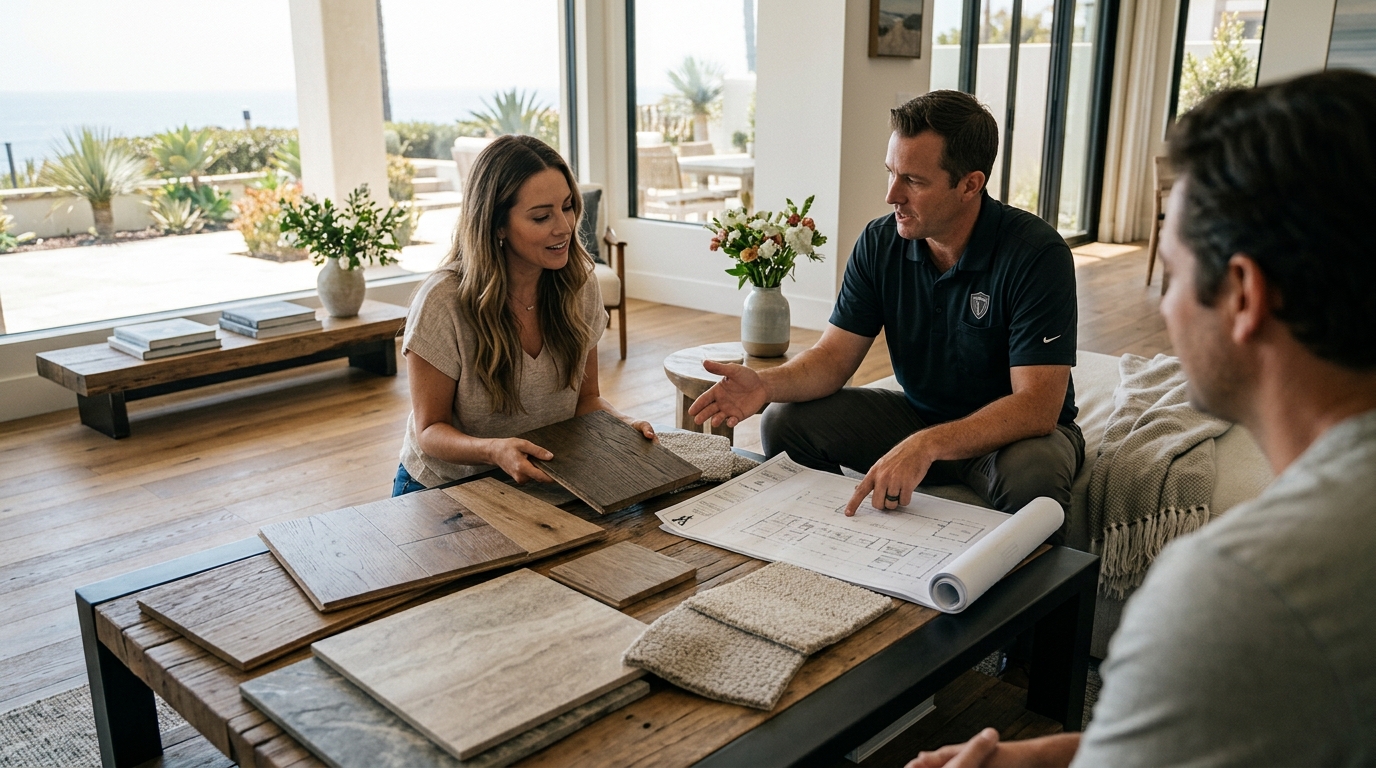
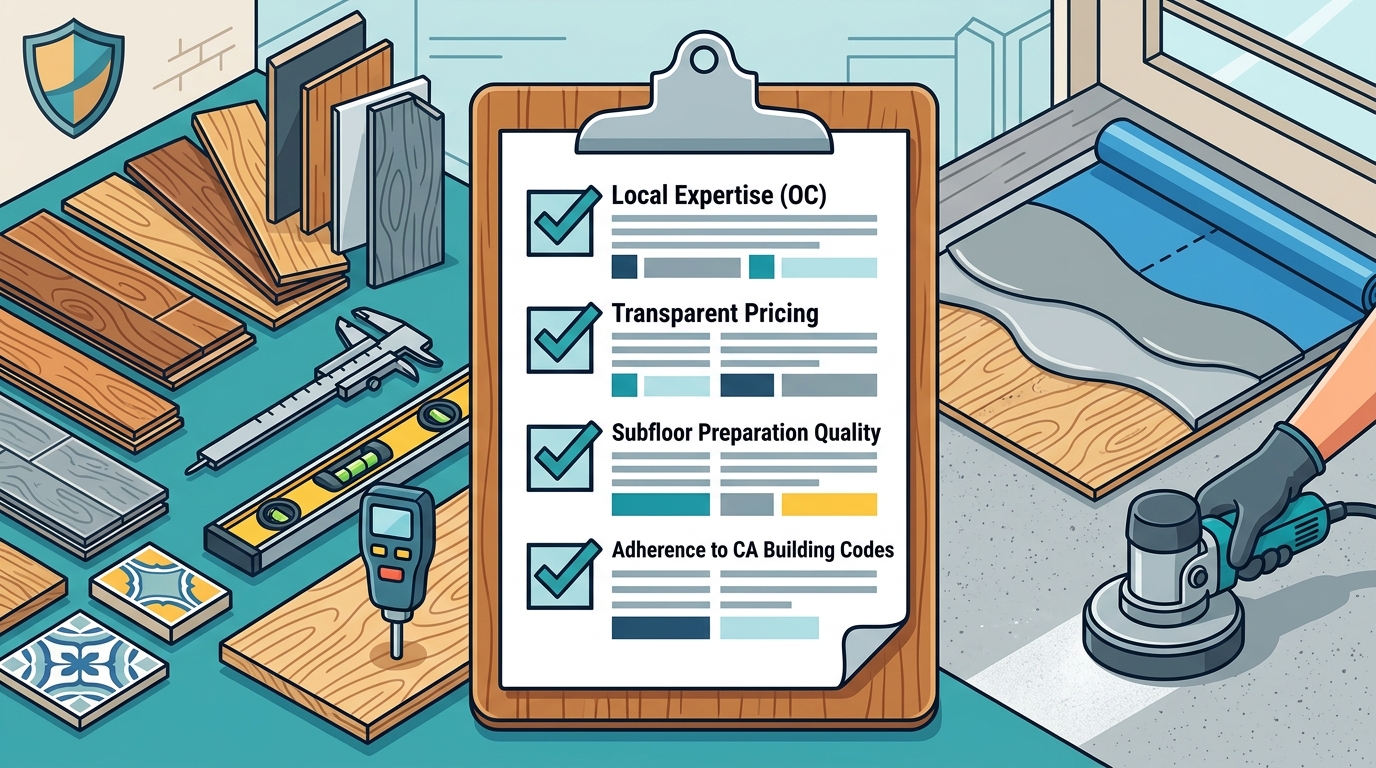
Choosing the right flooring company in Orange County, California, depends on verifying local expertise, transparent pricing, and proper subfloor preparation. Divinity Flooring Services provides a framework for evaluating contractors based on in-house labor, material quality, and adherence to California building codes. This guide covers verification steps, cost drivers, and local regulations to help you make an informed decision. according to U S Census
How to Choose: Separating Quality from Risk
Flooring contractor is a business entity that specializes in the installation, repair, and restoration of residential and commercial floor surfaces. In Orange County, the distinction between a reliable provider and a risky one often lies in labor structure and material sourcing. Many local operators rely on subcontractors, which can lead to inconsistent quality and communication gaps. A strong candidate uses an in-house team, ensuring that the person who estimates the job is the same person who installs the floor. This continuity reduces the risk of errors during the critical subfloor preparation phase.
In-House Labor vs. Subcontracting
Material Sourcing and Transparency
Quality flooring begins with the material. Reputable companies source from trusted manufacturers and can provide documentation for the products they install. They should be transparent about the grade of wood, the density of vinyl, or the porosity of tile. If a contractor cannot explain the difference between a standard ceramic tile and a porcelain tile, or between engineered and solid hardwood, that is a red flag. Transparency in material selection is a primary indicator of a professional operation.
What to Ask: Critical Pre-Commitment Questions
Before signing a contract, you must ask specific questions that reveal the contractor's operational depth. Vague answers to these questions often indicate a lack of experience or a willingness to cut corners. The goal is to move from general promises to specific operational details.
Who Will Be Doing the Work?
Ask directly if the installers are employees or subcontractors. If they are employees, ask how long they have been with the company. Experience matters in flooring because the techniques for installing luxury vinyl plank (LVP) differ significantly from those for solid hardwood. A contractor who can name the specific team members assigned to your project demonstrates a level of organization that is rare in the industry.
What Is Included in the Estimate?
Request a line-item breakdown of the estimate. It should separate material costs, labor costs, demolition, and disposal fees. Hidden costs often appear in the form of "unforeseen subfloor issues." A professional contractor will include a contingency or a clear policy for how additional work is priced. If the estimate is a single lump sum, ask for a detailed breakdown before proceeding.
How to Verify: Checking Credentials and Claims
Verification is the step that separates marketing claims from reality. You can verify a contractor's status through public records and professional directories. This process takes time but is essential for protecting your investment.
Licensing and Insurance
In California, general contractors must be licensed by the Contractors State License Board (CSLB). You can verify a license number online to ensure it is active and in good standing. Additionally, ask for a certificate of insurance that covers general liability and workers' compensation. If a contractor refuses to provide these documents, do not hire them. This is a non-negotiable safety measure.
Reviewing Past Work
Ask for a list of recent projects in your specific neighborhood. Call these references and ask about the timeline, communication, and final result. Look for patterns in the feedback. Did the crew clean up properly? Did they finish on time? Did any issues arise after the job was completed? First-hand accounts from neighbors are often more valuable than online reviews, which can be curated.
How It Works: The Installation Process
Professional flooring installation follows a structured sequence to ensure durability. Skipping steps in this process is the primary cause of premature floor failure. Understanding this workflow helps you monitor the progress of your project.
Subfloor Preparation
Subfloor preparation is the process of ensuring the base layer of the floor is level, dry, and structurally sound. This may involve grinding concrete, replacing damaged plywood, or installing a moisture barrier. In Orange County, where humidity can fluctuate, moisture mitigation is critical. A professional will test the subfloor for moisture levels before installing any new material. If the moisture is too high, they will address it before proceeding.
Installation and Finishing
Once the subfloor is ready, the installation begins. This includes laying the flooring material, installing transition strips, and adding baseboards or trim. The final step is a thorough inspection and cleanup. The contractor should walk through the space with you to ensure every detail meets your expectations. This final walkthrough is your opportunity to note any minor issues before the crew leaves.
What It Costs: Price Drivers and Budgeting
Flooring costs in Orange County are influenced by material choice, labor rates, and the condition of the existing floor. While specific prices vary by project, understanding the drivers helps you budget effectively.
Material Costs
Material is often the largest component of the total cost. Hardwood and natural stone are typically more expensive than vinyl or laminate. However, the price difference is not just about the material itself. It also reflects the complexity of installation. For example, installing large-format porcelain tiles requires more skill and time than installing click-lock vinyl planks. Always ask for the cost per square foot for both material and labor.
Labor and Complexity
Labor costs depend on the complexity of the job. A simple rectangular room is faster to install than a room with many angles, closets, or obstacles. Demolition and disposal of old flooring also add to the cost. If the existing floor is damaged, the cost of subfloor repair will increase. A detailed estimate should account for these variables.
What Goes Wrong: Common Mistakes to Avoid
Homeowners often make mistakes that lead to dissatisfaction or costly repairs. Avoiding these pitfalls is key to a successful project.
Ignoring Subfloor Condition
One of the most common mistakes is assuming the subfloor is ready for new flooring. If the subfloor is uneven or damaged, the new floor will reflect those issues. Bubbles, squeaks, and loose planks are often signs of poor subfloor preparation. Always insist on a professional inspection of the subfloor before finalizing the material choice.
Choosing the Wrong Material for the Space
Not all flooring is suitable for every room. For example, solid hardwood may not be ideal for a basement or a bathroom with high moisture levels. Choosing a material that does not match the environmental conditions of the space can lead to warping or mold. Consult with your contractor to ensure the material is appropriate for the specific room.
Versus Alternatives: DIY vs. Professional
Some homeowners consider installing their own flooring to save money. While this is possible for simple projects, it carries significant risks.
DIY Risks
DIY installation often results in uneven seams, improper acclimation of materials, and voided manufacturer warranties. Most manufacturers require professional installation to honor their warranty. If you install the floor yourself and it fails, you are responsible for the cost of replacement. Professional installation ensures that the floor is installed according to the manufacturer's specifications, protecting your investment.
Professional Value
For Specific Situations: Coastal and Historic Homes
Orange County has unique housing stock that requires specific considerations. Coastal homes and historic properties present distinct challenges for flooring.
Coastal Homes
Homes near the coast, such as those in Newport Beach or Huntington Beach, are exposed to higher humidity and salt air. This environment can affect certain flooring materials. Moisture-resistant options like porcelain tile or luxury vinyl are often recommended for these areas. Proper ventilation and moisture barriers are critical to prevent damage.
Historic Homes
Historic homes may have original hardwood floors that are worth restoring rather than replacing. Restoration can preserve the character of the home while improving its functionality. However, it requires specialized skills. A contractor with experience in historic preservation will know how to handle these delicate projects.
Rules and Protections: Legal and Code Compliance
Flooring projects are subject to local building codes and regulations. Compliance ensures safety and protects your property value.
Building Codes
The 2025 California Building Code, which goes into effect on January 1, 2026, sets standards for construction and renovation. Orange County Development Services provides information on these codes. While minor flooring changes may not require a permit, structural changes or work in certain areas may. Your contractor should be familiar with these requirements and handle any necessary permits.
Consumer Protections
California law provides protections for consumers hiring contractors. This includes requirements for written contracts and specific disclosures. Ensure that your contract includes a detailed scope of work, a timeline, and a payment schedule. Avoid paying large upfront sums. A standard payment schedule is often tied to project milestones.
Local Specifics: Orange County Nuances
Orange County is a diverse region with varying housing types and environmental conditions. Understanding these nuances helps you choose the right contractor and materials.
Regional Variations
Areas like Irvine and Costa Mesa have different housing stocks compared to Huntington Beach. Newer builds in Irvine may have different subfloor requirements than older homes in Costa Mesa. A local contractor will have experience with these variations. They will know which materials perform best in specific neighborhoods and how to handle common issues in local housing stock.
Climate Considerations
Orange County has a Mediterranean climate with mild winters and warm, dry summers. However, humidity levels can vary significantly between coastal and inland areas. This variation affects how flooring materials expand and contract. A professional will account for these climate factors when recommending materials and installation techniques.
Timing: When to Schedule Your Project
Timing your project can impact both the cost and the quality of the work. Scheduling during peak seasons may lead to longer wait times and higher prices.
Seasonal Demand
Spring and early summer are peak seasons for home improvement projects. Contractors are often booked weeks or months in advance. If you are flexible, scheduling in the fall or winter may allow for more availability and potentially better pricing. However, weather can also be a factor. Rainy days can delay certain types of work, particularly if the project involves exterior access or concrete work.
Acclimation Time
Wood flooring requires acclimation time to adjust to the indoor humidity and temperature. This process can take several days. If you are installing wood flooring, factor in this time when planning your schedule. Rushing the acclimation process can lead to gaps or cupping in the finished floor.
Results Over Time: Long-Term Performance
The quality of a flooring installation is judged by its performance over time. A well-installed floor should last for decades with proper care.
Durability and Maintenance
Different materials have different lifespans. Hardwood can last for generations if properly maintained. Vinyl and laminate have shorter lifespans but are easier to replace. Understanding the maintenance requirements of your chosen material is important. Regular cleaning and prompt attention to spills can extend the life of your floor.
Warranty and Support
Many contractors offer workmanship warranties that cover installation errors. These warranties vary in length and scope. Read the terms carefully. A workmanship warranty is separate from the manufacturer's warranty on the material. Ensure that you understand what is covered and for how long. This protection is valuable if any issues arise after the installation is complete.
Key Takeaways
- Verify that the contractor uses an in-house team rather than subcontractors to ensure consistent quality.
- Check the contractor's license and insurance status through official state and local resources.
- Insist on a detailed, line-item estimate that separates material, labor, and disposal costs.
- Subfloor preparation is critical; ensure the base is level, dry, and structurally sound before installation.
- Choose materials that are appropriate for the specific environmental conditions of your home.
- Understand the local building codes and permit requirements for your project.
- Schedule your project during off-peak seasons to potentially reduce wait times and costs.
- Review the workmanship warranty terms to understand your long-term protection.
Frequently Asked Questions
How long does a typical flooring installation take?
The duration depends on the size of the space and the complexity of the job. A single room may take one to two days, while a whole-home project can take one to two weeks. Subfloor preparation and acclimation time can add to the total duration.
Do I need a permit for a flooring project?
Most minor flooring changes do not require a permit. However, if the project involves structural changes or work in certain areas, a permit may be required. Your contractor should be able to advise you on the specific requirements for your project.
What is the difference between engineered and solid hardwood?
Engineered hardwood is made of multiple layers of wood with a real wood top layer. It is more stable in varying humidity conditions. Solid hardwood is made of a single piece of wood and is more susceptible to expansion and contraction.
How do I prepare my home for a flooring installation?
Clear the room of all furniture and personal items. Ensure that the area is accessible for the crew. If you have pets, arrange for them to be elsewhere during the installation. This helps the crew work efficiently and safely.
Can I walk on the new floor immediately?
It depends on the type of flooring. Some materials, like click-lock vinyl, can be walked on immediately. Others, like hardwood with a finish, may require 24 to 48 hours to cure. Your contractor will advise you on when it is safe to walk on the new floor.
How do I maintain my new floor?
Maintenance depends on the material. Hardwood requires regular sweeping and occasional refinishing. Vinyl and laminate are easier to clean and require less maintenance. Follow the manufacturer's care instructions to ensure the longevity of your floor.
Conclusion
Selecting a flooring company in Orange County requires diligence and attention to detail. By verifying credentials, understanding the process, and choosing the right materials, you can ensure a successful project. Divinity Flooring Services offers the expertise and local knowledge to guide you through every step. To begin your project, for a free consultation and estimate. according to U S Census