
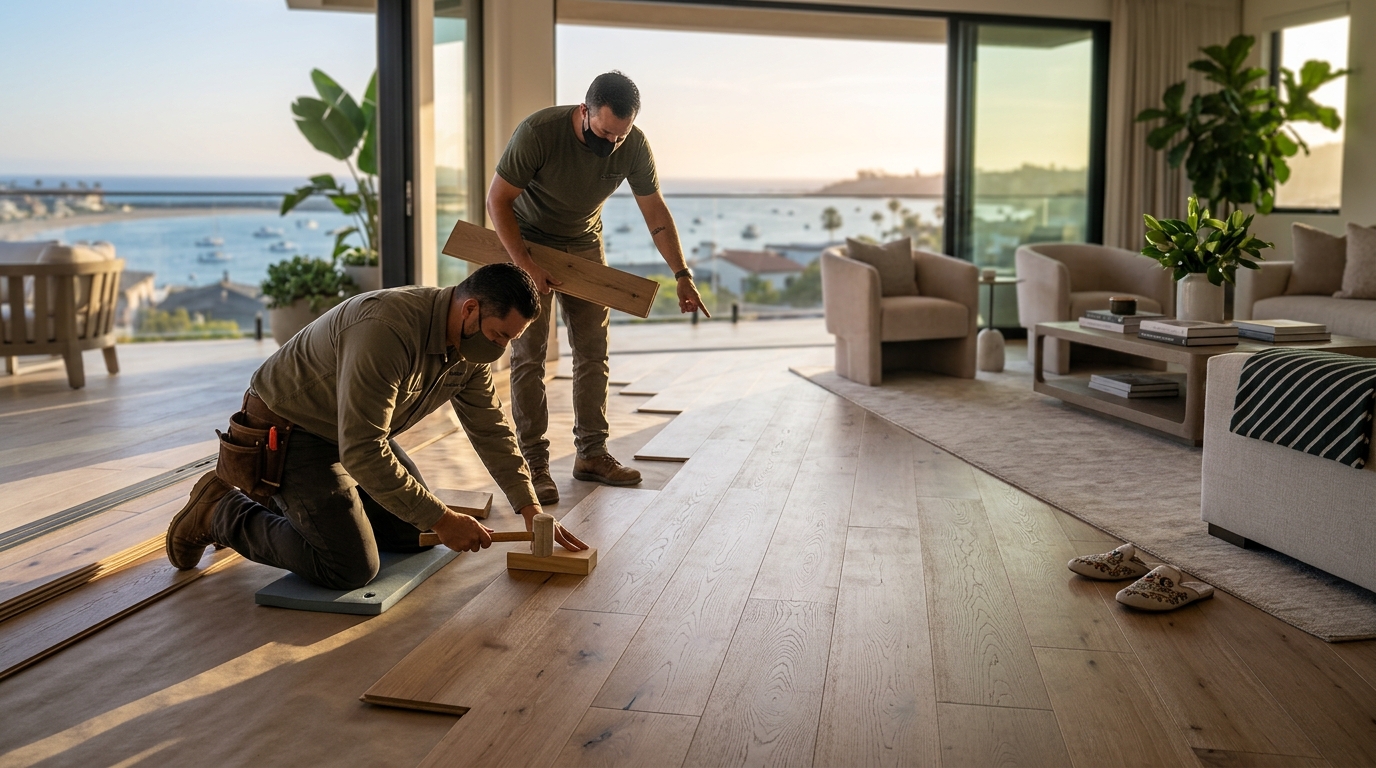
Divinity Flooring Services is a specialized contractor in Orange County that installs engineered hardwood flooring in Newport Beach and surrounding areas. This guide covers how to evaluate installers, verify credentials, understand costs, and avoid common mistakes. It provides a comprehensive framework for homeowners to make informed decisions about their flooring projects.
How to Choose an Installer
Choosing the right installer for engineered hardwood requires looking beyond price. A qualified professional demonstrates specific expertise in moisture management, subfloor preparation, and material handling. Engineered hardwood installation is a specialized trade that requires precision in acclimation, leveling, and finishing. Homeowners should prioritize contractors who specialize in flooring rather than general handyman services. Look for a team that uses in-house professionals rather than rotating subcontractors, as consistency in technique is critical for a seamless finish. Divinity Flooring Services operates with an in-house team, ensuring that the same skilled professionals handle every phase of the project from start to finish.
Specialization vs. Generalists
General contractors may offer flooring as an add-on service, but dedicated flooring companies focus exclusively on this trade. This specialization often results in better attention to detail, such as proper expansion gaps and transition strip placement. When evaluating a contractor, ask about their primary focus. If flooring is their core business, they are more likely to stay current with manufacturer requirements and installation best practices.
Experience with Local Conditions
Newport Beach homes often feature specific architectural styles and environmental conditions. An experienced local installer understands how coastal humidity and temperature fluctuations affect wood. They know which subfloor materials perform best in the region and how to prepare concrete slabs or plywood substrates correctly. This local knowledge is a significant differentiator when choosing a provider.
What to Ask Before Committing
Before signing a contract, homeowners should ask specific questions that reveal the contractor's process and accountability. These questions help identify potential red flags and ensure clear communication. Transparent communication is a hallmark of a reliable flooring contractor.
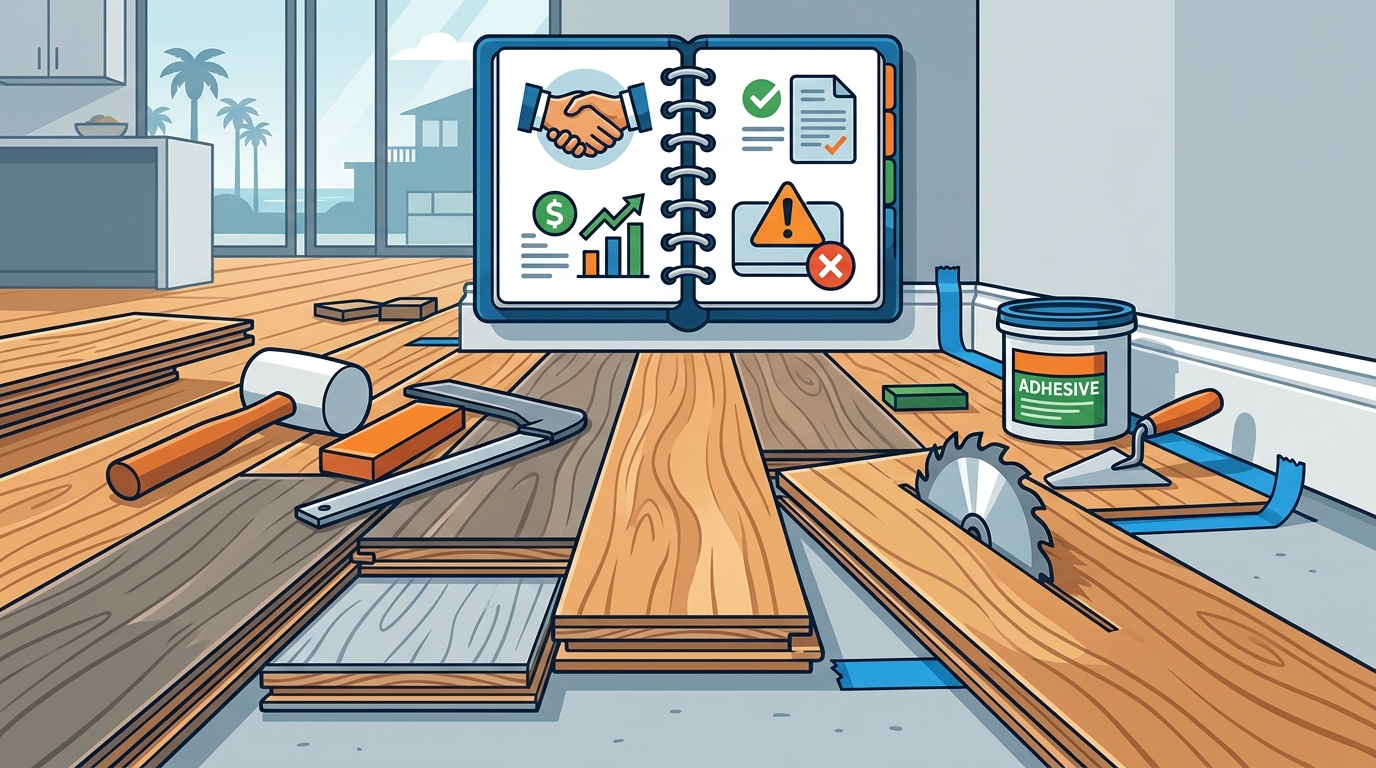
Key Questions for Contractors
- Who will be on-site? Ask if the installers are employees or subcontractors. Knowing the specific team helps ensure accountability.
- What is the subfloor preparation process? A detailed answer should include moisture testing, leveling, and underlayment selection.
- How do you handle acclimation? Engineered hardwood must acclimate to the room's conditions before installation. Ask how long this takes and how it is monitored.
- What is included in the warranty? Clarify if the warranty covers labor, materials, or both, and for how long.
- What is the cleanup protocol? Ask about daily cleanup and final debris removal.
How to Verify Credentials
Verifying a contractor's claims is essential for protecting your investment. While many companies advertise licenses and insurance, homeowners should independently confirm these details. Verification is a simple process that can prevent significant liability issues.
Checking Licenses and Insurance
Reviewing Past Work
Ask for references from recent projects, specifically those in similar environments to your home. Contact these references to ask about the contractor's punctuality, cleanliness, and communication. You can also request to see a portfolio of completed projects. Pay attention to the quality of transitions, grout lines (if applicable), and overall finish. A reputable company will be transparent about their past work and willing to provide verifiable references.
The Installation Process
Understanding the step-by-step process helps set realistic expectations for the project timeline. A professional installation follows a structured sequence to ensure durability and aesthetics. Proper sequencing is critical to preventing future issues like cupping or gaps.
Step-by-Step Workflow
- Consultation and Measurement: The contractor visits the home to assess the space, measure dimensions, and discuss design options. This includes evaluating the existing subfloor.
- Material Selection and Acclimation: Once materials are chosen, they are delivered to the site. The flooring must acclimate in the room for a specified period, usually 48 to 72 hours, to adjust to local humidity and temperature.
- Subfloor Preparation: The existing floor is removed if necessary. The subfloor is inspected for moisture, flatness, and structural integrity. Any issues are corrected, and underlayment is installed if required.
- Installation: The engineered hardwood is installed using the method specified by the manufacturer (glue-down, nail-down, or floating). Precision is key to ensuring a flat, stable surface.
- Finishing and Cleanup: Trim, baseboards, and transitions are installed. The site is thoroughly cleaned, and a final walkthrough is conducted with the homeowner.
Cost Factors
The cost of engineered hardwood installation varies based on several factors. Understanding these drivers helps homeowners budget effectively. Price is influenced by material quality, labor complexity, and site conditions.
Material Costs
Engineered hardwood comes in various species, widths, and finishes. Exotic woods and wider planks cost more than standard oak or maple. The grade of the wood (select, premium, or rustic) also impacts price. Homeowners should request a detailed quote that breaks down material costs separately from labor.
Labor and Site Preparation
Labor costs depend on the complexity of the installation. Factors such as the size of the room, the number of transitions, and the condition of the subfloor affect the final price. If the subfloor requires significant repair or leveling, this will add to the cost. A written estimate should clearly outline these additional charges to avoid surprises.
Common Mistakes to Avoid
Many flooring issues stem from improper preparation or installation. Avoiding these common mistakes ensures a long-lasting result. Preparation is the most critical phase of any flooring project.
Ignoring Moisture Issues
Installing wood over a damp subfloor is a leading cause of failure. Moisture can cause the wood to swell, warp, or develop mold. Always insist on a moisture test before installation. If the subfloor is too wet, it must be dried or replaced before proceeding.
Skipping Acclimation
Failing to acclimate the flooring to the room's conditions can lead to expansion and contraction issues after installation. The wood needs time to reach equilibrium with the environment. Rushing this step is a common error that results in gaps or buckling.
Inadequate Subfloor Leveling
Uneven subfloors cause a bumpy finish and can stress the locking mechanisms of floating floors. Proper leveling is essential for a smooth, stable installation. Contractors should use a straightedge to check for flatness and apply self-leveling compound if necessary.
Engineered Hardwood vs. Alternatives
Homeowners often compare engineered hardwood with other flooring options. Each material has distinct advantages and disadvantages. Choosing the right material depends on your lifestyle, budget, and aesthetic preferences.
| Feature | Engineered Hardwood | Luxury Vinyl Plank (LVP) | Laminate |
|---|---|---|---|
| Durability | High, can be refinished | Very high, water-resistant | High, wear layer dependent |
| Moisture Resistance | Moderate, sensitive to water | Excellent, fully waterproof | Good, core dependent |
| Aesthetics | Authentic wood look and feel | Realistic wood look | Printed wood look |
| Cost | Moderate to High | Low to Moderate | Low to Moderate |
| Refinishing | Yes, multiple times | No | No |
Engineered hardwood offers the authentic look of solid wood with improved stability. It is a better choice for homes where aesthetics are a priority and where moisture is controlled. LVP is ideal for high-moisture areas like bathrooms or basements. Laminate is a budget-friendly option that mimics wood but lacks the ability to be refinished.
Newport Beach Specifics
Newport Beach presents unique considerations for flooring projects. The coastal location and architectural styles of the area influence material choices and installation methods. Local expertise is valuable in navigating these specific challenges.
Coastal Climate Impact
Newport Beach experiences a mild climate with moderate humidity. However, seasonal changes can still affect wood flooring. Installers in this area are accustomed to managing these fluctuations. They know how to select appropriate underlayments and acclimate materials to ensure stability. Homeowners should discuss these local factors with their contractor during the consultation.
Architectural Styles
Many homes in Newport Beach feature traditional or mid-century modern designs. Engineered hardwood complements these styles well, offering a timeless look. The choice of wood species and finish should align with the home's architectural character. A local installer can provide guidance on selecting materials that enhance the home's aesthetic value.
Rules and Protections
Homeowners have rights and protections when hiring a contractor. Understanding these ensures a fair and transparent transaction. Legal and contractual protections are essential for any home improvement project.
Contractual Requirements
Warranty Coverage
Most flooring manufacturers offer warranties on their products. However, these warranties are often void if the installation does not meet manufacturer specifications. A professional installer will ensure that the installation complies with these requirements, preserving the warranty. Additionally, many contractors offer their own workmanship warranty, which covers labor-related issues. Divinity Flooring Services offers a 5-year workmanship warranty, providing added protection for homeowners.
Local Environmental Factors
Environmental factors in Orange County can impact flooring performance. Understanding these factors helps in selecting the right materials and preparation methods. Local conditions require specific technical solutions.
Humidity and Temperature
While Newport Beach has a stable climate, indoor humidity levels can vary based on HVAC systems and usage. Proper ventilation and humidity control are important for maintaining wood flooring. Installers should recommend appropriate humidity levels for the home and advise on how to maintain them.
Subfloor Conditions
Older homes in the area may have concrete slabs or plywood subfloors with varying conditions. Moisture migration from concrete slabs is a common issue. Proper vapor barriers and moisture testing are essential to prevent damage. A local installer will be familiar with these specific subfloor challenges and know how to address them effectively.
Timing Your Project
Seasonal Considerations
Spring and fall are often popular times for flooring projects due to mild weather. However, this can lead to longer wait times for contractors. Scheduling in the winter or summer may allow for faster start dates. Homeowners should consider their personal schedules and the contractor's availability when planning the project.
Project Duration
The duration of an engineered hardwood installation depends on the size of the area and the complexity of the work. A typical room may take 2 to 3 days to install, plus time for acclimation and subfloor preparation. Homeowners should plan for the project to take several days to a week, depending on the scope. Clear communication about the timeline helps manage expectations.
Long-Term Results
Engineered hardwood is a long-term investment that can enhance the value and beauty of your home. With proper care, it can last for decades. Long-term performance depends on quality installation and maintenance.
Maintenance and Care
Regular cleaning and maintenance are essential for preserving the appearance of engineered hardwood. Use a soft broom or vacuum to remove dust and debris. Avoid using excessive water or harsh chemicals. Periodic refinishing can restore the floor's luster and protect it from wear. Following the manufacturer's care guidelines ensures the floor remains in excellent condition.
Value Addition
Key Takeaways
- Choose a specialized flooring contractor with an in-house team for consistent quality.
- Verify licenses and insurance independently to protect your investment.
- Ask specific questions about subfloor preparation and acclimation processes.
- Understand the cost drivers, including material quality and site complexity.
- Avoid common mistakes like ignoring moisture issues or skipping acclimation.
- Compare engineered hardwood with alternatives like LVP and laminate based on your needs.
- Consider local environmental factors in Newport Beach when selecting materials.
- Ensure proper contractual and warranty protections are in place.
Frequently Asked Questions
How long does engineered hardwood installation take?
The installation process typically takes 2 to 3 days for a standard room, plus time for acclimation and subfloor preparation. The total duration depends on the size of the area and the complexity of the work.
Is engineered hardwood suitable for bathrooms?
Engineered hardwood is generally not recommended for bathrooms due to moisture sensitivity. Luxury Vinyl Plank (LVP) is a better choice for high-moisture areas. If you prefer the look of wood in a bathroom, consider a moisture-resistant engineered product with proper sealing.
Can I install engineered hardwood over existing flooring?
In some cases, yes, but it depends on the height and condition of the existing floor. The subfloor must be flat, stable, and dry. A professional assessment is necessary to determine if the existing floor can be used as a base.
What is the difference between engineered and solid hardwood?
Engineered hardwood consists of multiple layers of wood with a top layer of real hardwood. It is more stable than solid hardwood and can be installed over concrete slabs. Solid hardwood is made of a single piece of wood and is typically nailed to a wood subfloor.
How do I maintain engineered hardwood flooring?
Regular sweeping or vacuuming, occasional damp mopping with a recommended cleaner, and avoiding excessive water are key. Use felt pads under furniture legs and place mats at entryways to reduce wear.
Does Divinity Flooring Services offer a warranty?
Yes, Divinity Flooring Services offers a 5-year workmanship warranty on their installations. This covers labor-related issues, providing added protection for homeowners.
What is the cost of engineered hardwood installation in Newport Beach?
Costs vary based on material quality, room size, and site conditions. A written estimate is provided after an on-site evaluation. Pricing, availability, and timelines may vary by project.
How do I verify a contractor's license in California?
You can verify a contractor's license through the Contractors State License Board (CSLB) website. Enter the license number to check its status and any disciplinary actions.
Conclusion
Choosing the right installer for engineered hardwood flooring in Newport Beach is a critical decision that impacts the beauty and longevity of your home. By following the guidelines in this article, you can evaluate contractors effectively, verify their credentials, and make an informed choice. Divinity Flooring Services is a trusted partner for homeowners in Orange County, offering specialized expertise and a commitment to quality. To start your project, for a free consultation and estimate.