
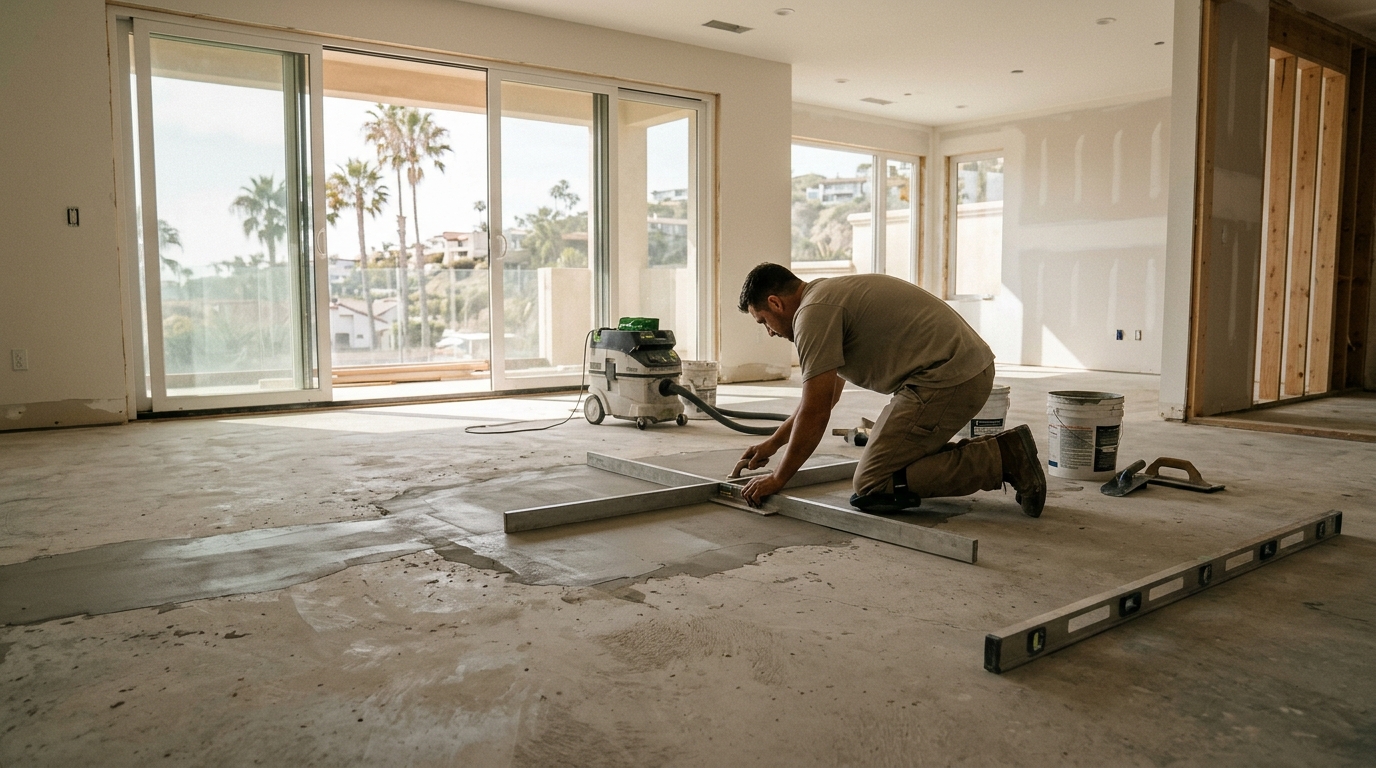
Subfloor preparation is the critical foundation that determines the longevity, stability, and visual quality of your luxury vinyl plank (LVP) flooring. In Orange County, where humidity and temperature fluctuations can stress building materials, a properly prepared subfloor prevents common issues like cupping, clicking, and premature wear. Divinity Flooring Services emphasizes that skipping or rushing this phase is the leading cause of failed LVP installations in the region.
Structural Integrity and Load Distribution
Luxury vinyl plank is a rigid material that does not flex like carpet or soft wood. It requires a flat, stable, and structurally sound base to perform correctly. Subfloor preparation is the process of inspecting, repairing, and leveling the underlying surface to ensure it can support the weight of the new flooring without movement. If the subfloor is weak or uneven, the LVP will transfer those imperfections to the surface, resulting in a bumpy floor that feels unstable underfoot.
In older Orange County homes, particularly those in Huntington Beach and Newport Beach, original subfloors may have suffered from moisture damage or settling over the decades. Divinity Flooring Services begins every project with a thorough structural assessment. We look for soft spots, sagging joists, or compromised plywood. By reinforcing these areas before installation, we ensure that the floor can handle daily foot traffic and furniture weight without developing cracks or gaps over time.
Moisture Control in Coastal Climates
Moisture is the primary enemy of LVP flooring, especially in coastal Orange County communities like Laguna Beach and Costa Mesa. While LVP is water-resistant, it is not impervious to sustained moisture exposure from below. Subfloor preparation is the process of mitigating vapor transmission and ensuring the subfloor is dry before the new floor is laid. If moisture is trapped beneath the planks, it can cause the flooring to swell, warp, or develop mold in the subfloor itself.
Our team uses moisture testing tools to measure the moisture content of concrete slabs and wood subfloors. If levels are too high, we install appropriate moisture barriers or allow for proper drying times. This step is non-negotiable for long-term performance. By addressing moisture at the subfloor level, we protect your investment and maintain the indoor air quality of your home. Divinity Flooring Services treats moisture mitigation as a core component of our preparation workflow, not an optional add-on.
Achieving Industry Flatness Standards
Manufacturers of LVP flooring have strict requirements for subfloor flatness. A common industry standard is that the subfloor should not deviate more than 3/16 of an inch over a 10-foot radius. Subfloor preparation is the process of grinding, leveling, or adding self-leveling compounds to meet these precise tolerances. If the subfloor is too uneven, the LVP planks will not lock together properly, leading to visible gaps, clicking sounds, and premature wear at the locking mechanisms.
Uneven subfloors are common in homes with multiple layers of old flooring or in areas where previous repairs were not done correctly. Our technicians use laser levels and straightedges to identify high and low spots. We then grind down high areas or apply self-leveling underlayment to fill low spots. This precision work ensures that your new floor lies perfectly flat, providing a smooth walking surface and a professional finish that lasts for years.
Acoustic Comfort and Underfoot Feel
The subfloor also plays a significant role in the acoustic properties of your home. LVP flooring can be noisy if installed directly on a hard, uneven surface without proper preparation. Subfloor preparation is the process of ensuring the base is smooth and, when necessary, adding an underlayment that dampens sound and provides cushioning. A well-prepared subfloor reduces footfall noise, making your home quieter and more comfortable.
In open-concept living spaces, which are popular in modern Orange County renovations, sound transmission can be a concern. By preparing the subfloor correctly and selecting the right underlayment, we help minimize noise transfer between rooms. This attention to detail enhances the overall living experience, making your home feel more luxurious and serene. Divinity Flooring Services focuses on these sensory details to ensure your new floor not only looks good but also feels right.
Long-Term Value and Warranty Protection
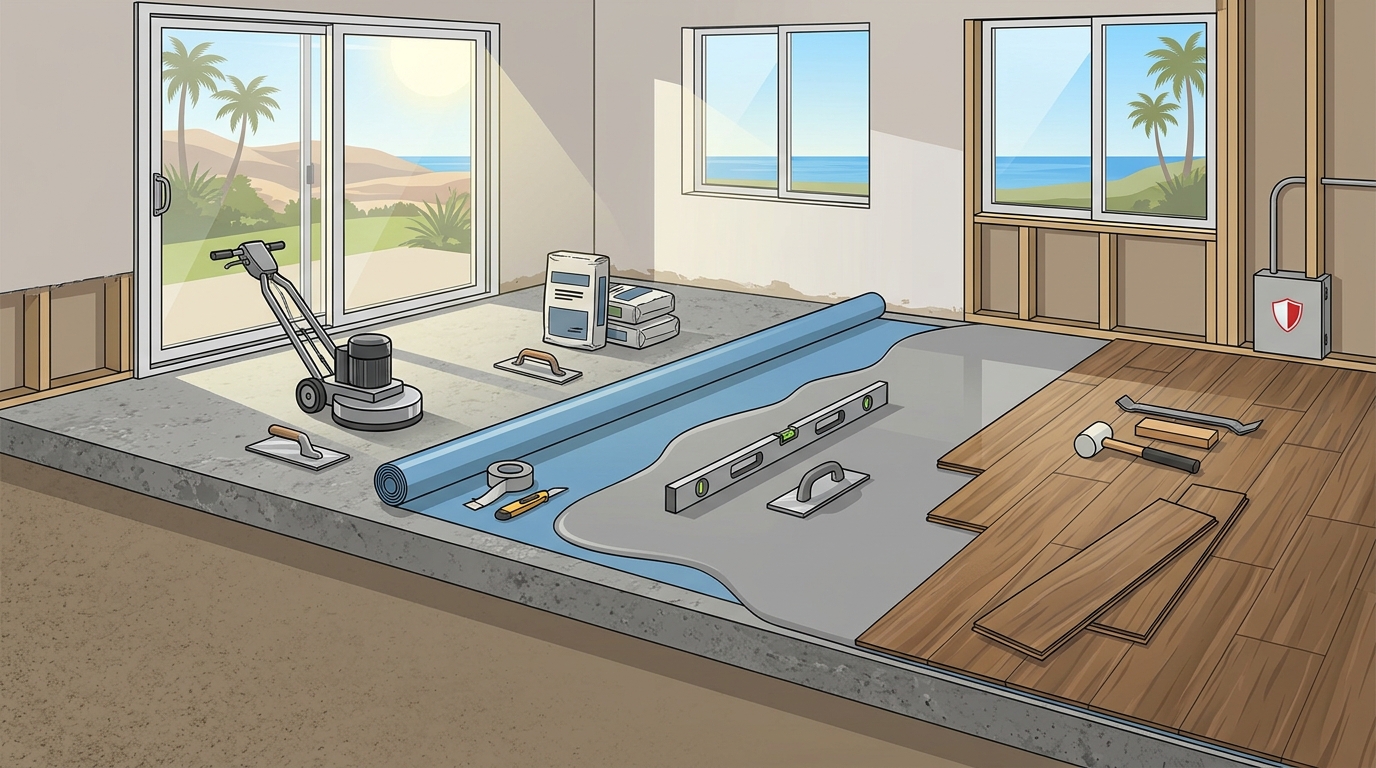
Proper subfloor preparation is essential for maintaining the manufacturer’s warranty on your LVP flooring. Most manufacturers will void their warranty if the flooring is installed on an unprepared or non-compliant subfloor. Subfloor preparation is the process of adhering to these technical specifications to protect your financial investment. By ensuring the base is flat, dry, and structurally sound, you safeguard the longevity of your flooring and avoid costly repairs down the line.
Investing in professional preparation is a cost-effective strategy. The cost of fixing a failed installation due to poor subfloor work far exceeds the cost of doing it right the first time. Divinity Flooring Services provides transparent estimates for preparation work, so you know exactly what to expect. We believe that a well-prepared subfloor is the foundation of a successful flooring project, delivering lasting beauty and performance for your home.
Key Takeaways
- Subfloor preparation is the process of ensuring the base is flat, dry, and structurally sound before LVP installation.
- Moisture control is critical in coastal Orange County to prevent swelling and mold in the subfloor.
- Industry standards require subfloors to be flat within 3/16 of an inch over a 10-foot radius.
- Poor preparation leads to clicking, gaps, and premature wear in rigid LVP flooring.
- Professional preparation protects your manufacturer’s warranty and extends the life of your floor.
- Divinity Flooring Services uses moisture testing and precision leveling to ensure optimal results.
Frequently Asked Questions
How do I know if my subfloor needs preparation?
You should have your subfloor inspected by a professional if you notice unevenness, soft spots, or moisture issues. A moisture test and flatness check are the most reliable ways to determine if preparation is needed before installing LVP.
Can I install LVP over an existing floor?
In some cases, yes, but only if the existing floor is flat, stable, and free of moisture issues. Often, removing old flooring is necessary to ensure proper subfloor preparation and prevent height issues with doors and transitions.
What is the most common subfloor issue in Orange County?
Moisture intrusion is the most common issue, particularly in coastal areas. Humidity and temperature changes can cause wood subfloors to expand and contract, leading to unevenness and potential moisture damage.
How long does subfloor preparation take?
The time required depends on the condition of the subfloor. Minor leveling might take a day, while extensive moisture drying or structural repairs can take several days. Divinity Flooring Services provides a timeline during your initial consultation.
Does subfloor preparation affect the warranty?
Yes, most LVP manufacturers require that the subfloor meets specific flatness and moisture standards. Failure to prepare the subfloor correctly can void the manufacturer’s warranty, making professional preparation essential.
Ready for a Flawless LVP Installation?
Proper subfloor preparation is the key to a beautiful, durable, and quiet luxury vinyl plank floor. At Divinity Flooring Services, we handle every aspect of the preparation process, from moisture testing to precision leveling, ensuring your new floor performs perfectly for years to come. To discuss your project and schedule a free consultation, contact our team today.