
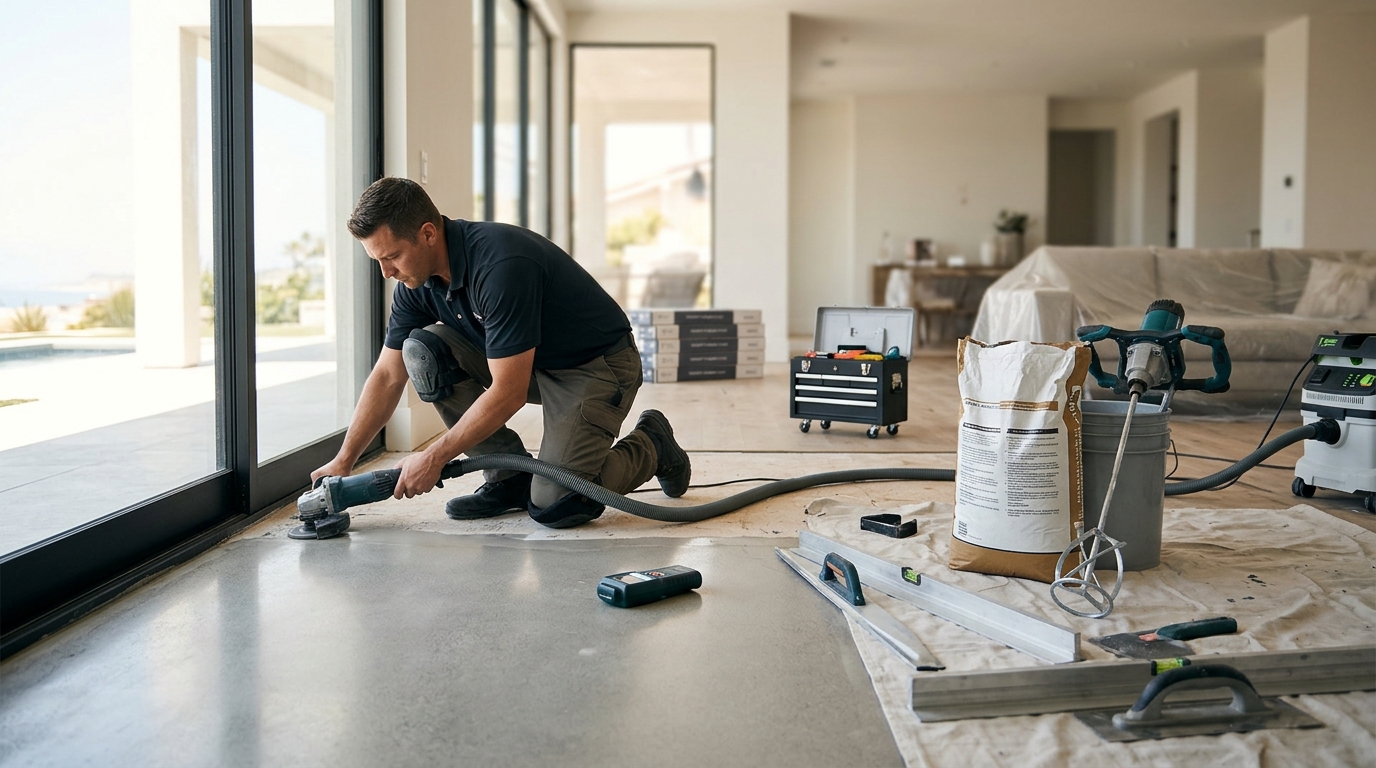
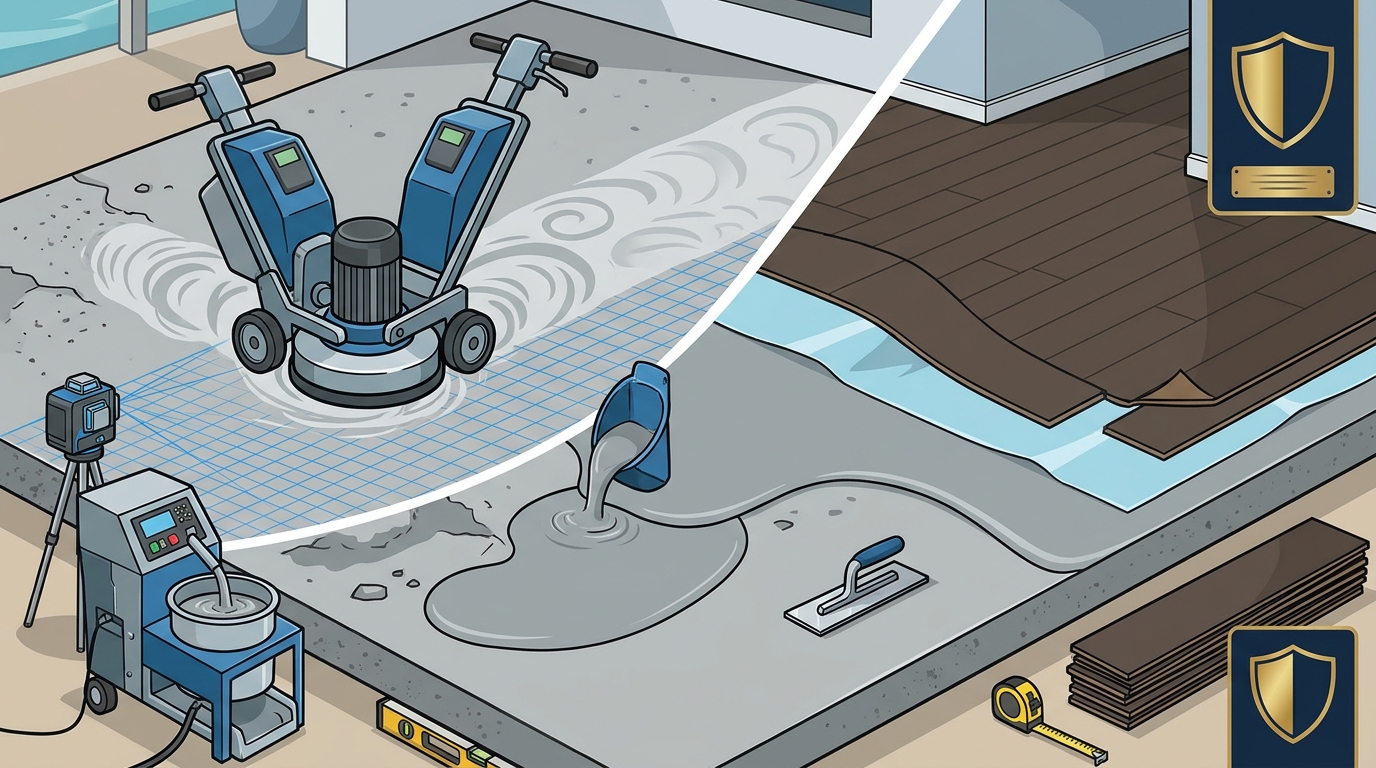
Proper subfloor preparation is the single most critical factor in ensuring a long-lasting, flat, and quiet luxury vinyl plank (LVP) floor. You must ensure the subfloor is clean, dry, level, and structurally sound before installation. Skipping these steps leads to premature wear, noise, and visible defects. Divinity Flooring Services specializes in these critical prep steps to protect your investment.
Ensuring Structural Integrity and Stability
Luxury vinyl plank is a rigid material that requires a solid foundation. If the subfloor is soft, sagging, or unstable, the LVP will flex, leading to broken locking mechanisms and a spongy feel underfoot. Structural integrity is the ability of the subfloor to support the weight of the flooring and the furniture placed upon it without deflection. Homeowners should walk the room and listen for squeaks or feel for soft spots. Any area that feels like a trampoline needs immediate reinforcement. Professional floor repair services can identify weak joists or loose panels that DIY inspections often miss. Ignoring structural issues is the fastest way to ruin a new floor.
Managing Moisture and Vapor Barriers
Moisture is the enemy of any flooring material, including LVP. While LVP is water-resistant, trapped moisture can cause warping, cupping, or mold growth underneath the planks. Moisture mitigation is the process of controlling the amount of water vapor that moves through the subfloor. For concrete slabs, you must test the moisture emission rate. If the rate is too high, a vapor barrier or moisture mitigation system is required. For wood subfloors, you must ensure the wood is dry and acclimated to the room's humidity. Expert installation teams use moisture meters to verify that the subfloor is within the acceptable range before laying a single plank. This step prevents costly failures down the line.
Achieving the Correct Level and Flatness
LVP is not forgiving of uneven surfaces. The flooring will telegraph any bumps, dips, or slopes in the subfloor. Leveling is the process of correcting uneven surfaces to create a flat plane for installation. Most manufacturers require the subfloor to be within a specific tolerance, often 3/16 of an inch over a 10-foot span. You can check this with a straightedge or a laser level. If the subfloor is uneven, you must use self-leveling underlayment or shims to correct the issue. Floor leveling services ensure that the surface is perfectly flat, which is essential for the locking systems to engage properly. A flat subfloor also ensures that doors and cabinets align correctly after installation.
Cleaning and Smoothing the Surface
Debris, dust, and old adhesive can create pressure points that damage the LVP. Cleaning is the process of removing all contaminants from the subfloor surface. You must sweep, vacuum, and damp mop the area to remove fine dust. Any remaining adhesive, wax, or paint must be scraped off. The surface should be smooth and free of sharp edges. Floor restoration and prep services include detailed cleaning and smoothing to ensure a pristine base. A clean subfloor prevents the LVP from shifting and ensures a professional finish. It also extends the life of the flooring by preventing abrasive particles from wearing down the surface.
Acclimating the Flooring Material
Wood-based and vinyl materials expand and contract with changes in temperature and humidity. Acclimation is the process of allowing the flooring material to adjust to the room's environmental conditions before installation. You should unbox the planks and let them sit in the room for at least 48 to 72 hours. Keep the room at the temperature and humidity levels where it will be used. This prevents the planks from expanding after installation, which can cause buckling or gaps. Professional installers always follow manufacturer acclimation guidelines to ensure a stable installation. Skipping this step is a common mistake that leads to post-installation issues.
Key Takeaways
- Structural integrity is the foundation of a successful LVP installation.
- Moisture testing and mitigation are mandatory for concrete slabs.
- Subfloor leveling must meet manufacturer tolerances to prevent telegraphing.
- Thorough cleaning removes debris that can damage the flooring.
- Acclimation allows the material to adjust to the room's environment.
- Professional preparation ensures a long-lasting and quiet floor.
Frequently Asked Questions
Do I need to remove old flooring before installing LVP?
It depends on the condition of the old flooring. If it is flat, clean, and stable, you can install LVP over it. However, if it is uneven, damaged, or has moisture issues, you must remove it. Floor repair and subfloor prep experts can assess whether removal is necessary.
Can I install LVP over concrete?
Yes, but you must test for moisture first. If the moisture emission rate is high, you need a vapor barrier or moisture mitigation system. Professional installation ensures the concrete is properly prepared.
How level does the subfloor need to be?
Most manufacturers require the subfloor to be within 3/16 of an inch over a 10-foot span. You should check the specific requirements for your LVP product. Floor leveling services can correct any unevenness.
What is the best way to clean the subfloor?
How long should I acclimate the LVP?
Most manufacturers recommend 48 to 72 hours. Keep the room at the temperature and humidity levels where it will be used. Professional installers follow these guidelines to ensure a stable installation.
Conclusion
Subfloor preparation is not optional; it is the foundation of a successful luxury vinyl plank installation. By ensuring structural integrity, managing moisture, leveling the surface, cleaning thoroughly, and acclimating the material, you protect your investment. To plan your visit, contact our team for a free consultation and written estimate. Our team will assess your subfloor and provide a comprehensive preparation plan tailored to your space.