

What should I ask a flooring contractor before hiring them in Orange County?
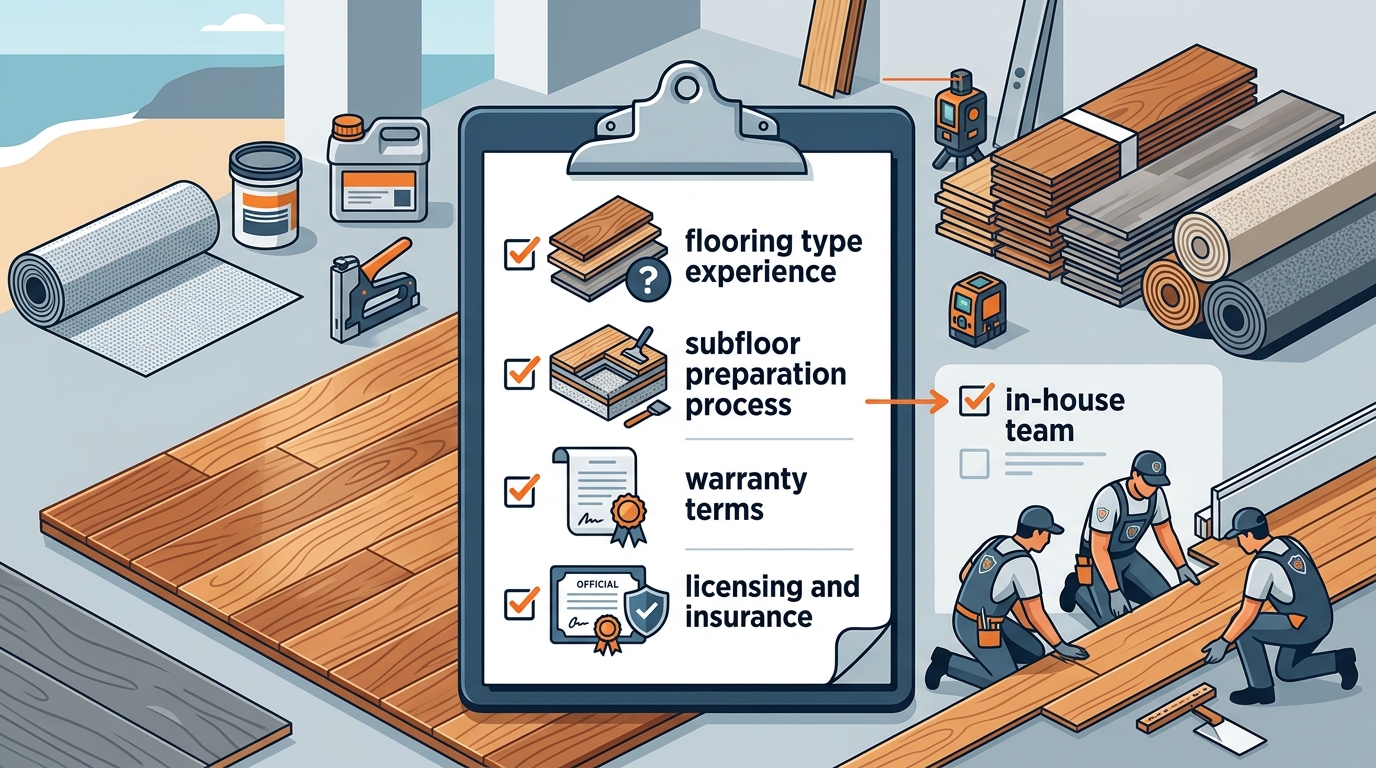
Before hiring a flooring contractor in Orange County, you should ask about their specific experience with your flooring type, their subfloor preparation process, and their warranty terms. You must also verify their licensing, insurance, and whether they use in-house crews or subcontractors. These questions help you assess technical competence and accountability. Divinity Flooring Services operates with an in-house team, ensuring consistent quality from start to finish.
Verify Licensing, Insurance, and Local Presence
Confirming a contractor's legal standing is the first step in protecting your home and investment. A licensed contractor is a professional who holds the necessary state and local permits to perform construction work legally. In California, flooring contractors must hold a valid C-33 license. You should ask for their license number and verify it through the California Contractors State License Board. This step ensures the business is legally authorized to operate and is subject to regulatory oversight.
Insurance is equally critical. Ask for a certificate of insurance that covers both general liability and workers' compensation. If a worker is injured on your property or if your home is damaged during the project, you want that risk covered by the contractor's policy, not your homeowner's insurance. Local presence also matters. A contractor based in Orange County, such as Divinity Flooring Services in Huntington Beach, is more likely to understand local building codes and climate conditions. They can also respond quickly to any post-installation concerns.
Assess Subfloor Preparation and Moisture Control
The quality of your new floor depends entirely on the condition of the subfloor. Subfloor preparation is the process of ensuring the base layer is level, dry, and structurally sound before new materials are installed. Many homeowners focus on the finish material but neglect the foundation. You should ask the contractor how they test for moisture and how they level uneven surfaces. Improper preparation leads to bubbling, warping, and premature failure of the flooring.
Moisture control is a specific technical skill. Ask if they use moisture testing tools and what their protocol is for high-humidity areas like bathrooms or kitchens. A competent contractor will explain their use of vapor barriers or self-leveling underlayment. For example, floor repair and subfloor prep services often involve addressing water-damaged plywood or OSB. If a contractor skips these steps to save time, you are likely to face costly repairs within a few years. This technical diligence separates professional installers from casual laborers.
Clarify the Scope of Work and Material Sourcing
Ambiguity in the contract is a common source of disputes. You need a detailed written estimate that lists every task, material, and labor cost. Ask specifically who supplies the materials and who is responsible for delivery. If the contractor buys the materials, ask if they are a direct distributor or a reseller. This affects pricing and warranty support. You should also ask about the demolition process. Will they remove old flooring, haul away debris, and dispose of it properly? These details prevent surprise charges later. according to Tips for hiring
Material sourcing also impacts the timeline. Ask if the specific product you want is in stock or if it requires a lead time. For high-end residential projects, specific shades or patterns may need to be ordered. A transparent contractor will provide a realistic schedule based on material availability. Flooring installation projects vary in complexity, so a detailed scope of work ensures both parties understand the expectations. This clarity builds trust and reduces the risk of project delays.
Understand Warranty Coverage and Post-Installation Support
Warranties protect your investment, but the terms vary significantly between manufacturers and installers. A workmanship warranty is a guarantee provided by the contractor that covers defects in their installation process. You should ask how long this warranty lasts and what it specifically covers. For instance, does it cover lifting, squeaking, or gaps? Many contractors offer a one-year warranty, while others, like Divinity Flooring Services, offer a five-year workmanship warranty. This longer coverage reflects confidence in their craftsmanship.
It is also important to distinguish between manufacturer warranties and workmanship warranties. The manufacturer warranty covers defects in the product itself, such as delamination or color fading. The installer's warranty covers how the product was put down. Ask if the installer is authorized by the manufacturer to install that specific product. Some manufacturers require certified installers to honor their warranty. If the installer is not certified, you may void the manufacturer's warranty. This distinction is crucial for long-term peace of mind.
Evaluate Communication and Project Management
Communication style is a strong predictor of project success. Ask who your primary point of contact will be throughout the project. Will you be dealing with the owner, a project manager, or a rotating cast of workers? A dedicated point of contact ensures that your questions are answered promptly and that changes are documented. You should also ask about their daily work schedule and how they handle unexpected issues. A professional team will keep you informed of progress and any delays.
Project management involves coordinating multiple tasks, from demolition to final cleanup. Ask how they manage the sequence of work to minimize disruption to your daily life. For example, will they complete one room before moving to the next? This approach allows you to use parts of your home during the renovation. Contacting a contractor for a free consultation is a good way to gauge their responsiveness. If they are slow to reply or vague in their answers, it may be a sign of poor management. Clear communication ensures a smoother experience from the first call to the final walkthrough.
Key Takeaways
- Verify the contractor's California C-33 license and insurance certificates before signing any contract.
- Ask about their subfloor preparation process, including moisture testing and leveling techniques.
- Request a detailed written estimate that specifies materials, labor, and demolition costs.
- Clarify the difference between manufacturer warranties and the contractor's workmanship warranty.
- Confirm that the contractor uses an in-house team rather than rotating subcontractors.
- Establish a clear communication plan with a dedicated point of contact for the project.
Frequently Asked Questions
What is a C-33 license in California?
A C-33 license is a specific contractor's license in California that authorizes a business to perform flooring work. It is required for any contractor installing flooring materials. You can verify a license number through the California Contractors State License Board website.
How long should a workmanship warranty last?
Workmanship warranties typically range from one to five years. A longer warranty, such as five years, indicates greater confidence in the installation quality. You should ask what specific defects are covered under the warranty terms.
Do I need to be home during the installation?
You do not need to be home for the entire duration, but you should be available for key milestones. These include the initial measurement, material selection, and the final walkthrough. You need to be present to approve any changes or inspect the finished work.
What is the difference between a manufacturer warranty and a workmanship warranty?
A manufacturer warranty covers defects in the flooring product itself, such as material flaws. A workmanship warranty covers errors in the installation process, such as improper leveling or sealing. Both are important, but they are provided by different entities.
How can I verify if a contractor is insured?
You can ask the contractor for a certificate of insurance. This document should list their general liability and workers' compensation coverage. You can also call the insurance provider directly to verify that the policy is active and valid.
Should I pay for the entire project upfront?
It is generally not recommended to pay for the entire project upfront. A standard payment schedule involves a deposit to secure the booking, progress payments based on milestones, and a final payment upon completion. This structure protects both you and the contractor.
Start Your Flooring Project with Confidence
Choosing the right flooring contractor is a critical decision that impacts your home's value and comfort. By asking the right questions about licensing, preparation, and warranties, you can make an informed choice. Contact Divinity Flooring Services to schedule a free consultation and discuss your project needs with our experienced team.