
Common Flooring Installation Mistakes Orange County Contractors Make and How to Avoid Them
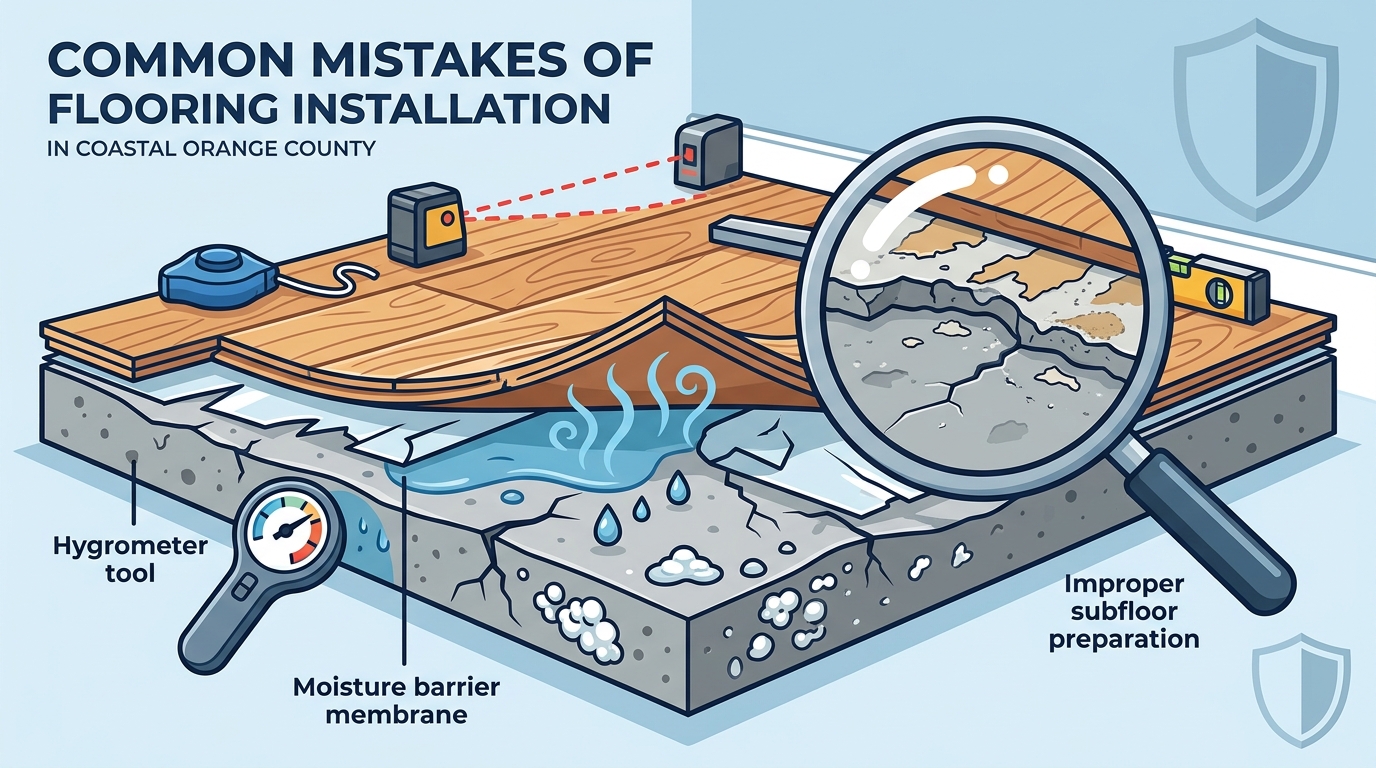
Homeowners in Orange County face unique environmental challenges when renovating their properties. The coastal humidity, seasonal temperature swings, and hard water deposits can severely compromise flooring integrity if not managed correctly. According to industry data, improper subfloor preparation is responsible for nearly 60% of all premature flooring failures in coastal California regions. This statistic highlights why local expertise matters more than ever. At Divinity Flooring Services, we have seen firsthand how small oversights during the initial phase lead to costly repairs down the road. This guide details the most frequent errors made by contractors in our region and provides actionable steps to ensure your investment lasts.
1. Ignoring Material Acclimation Protocols
One of the most critical yet frequently overlooked steps in flooring installation is acclimation. Acclimation is the process of allowing flooring materials to adjust to the temperature and humidity levels of the room where they will be installed. This is especially vital for natural wood products and certain engineered woods common in Orange County homes.
Contractors often rush to meet tight deadlines, skipping the 48 to 72-hour acclimation period. When wood is installed without proper acclimation, it reacts to the local climate by expanding or contracting. This leads to cupping, gapping, or buckling within months of installation. In coastal areas like Huntington Beach and Newport Beach, humidity levels fluctuate significantly between seasons. Ignoring this factor guarantees long-term structural issues.
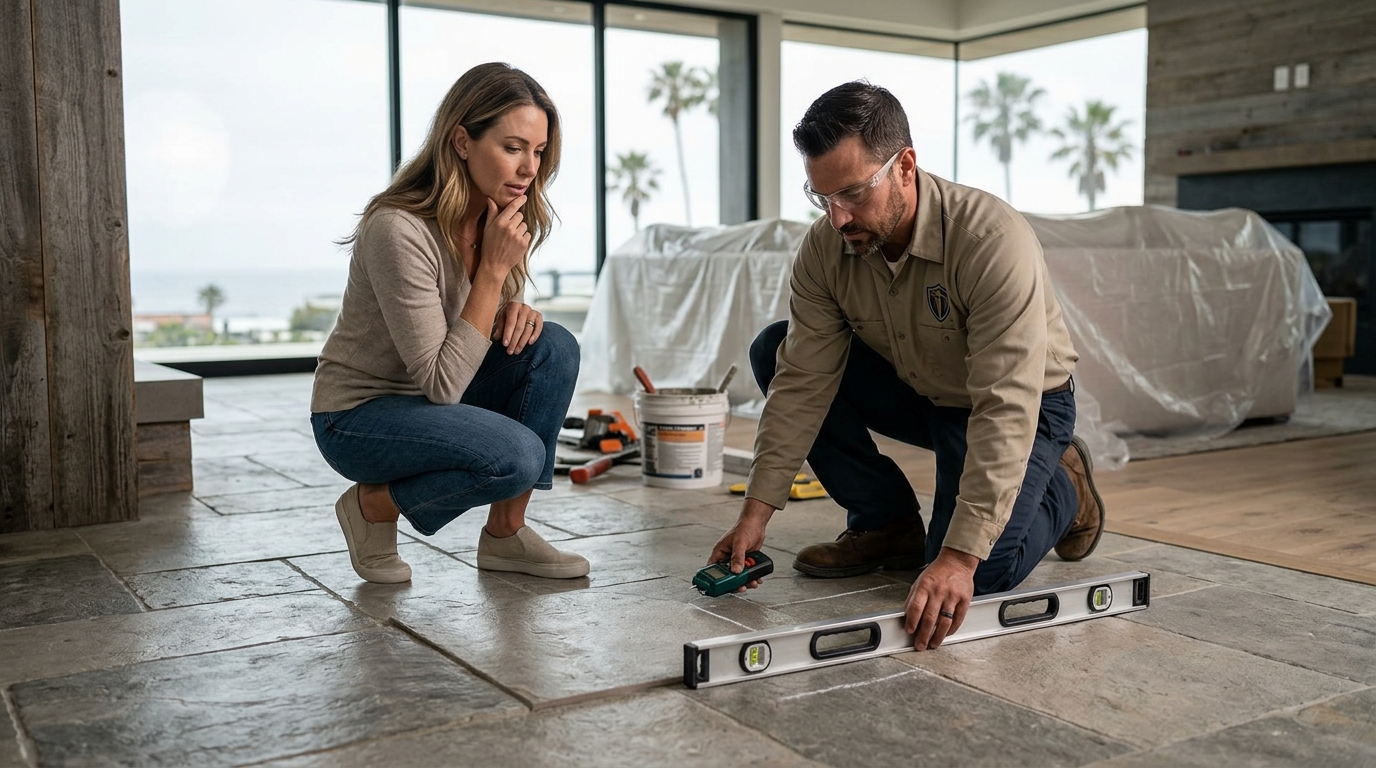
To avoid this mistake, insist on a written acclimation schedule before work begins. Ensure your contractor monitors the subfloor moisture content and room humidity levels daily. At Divinity Flooring Services, we treat acclimation as a non-negotiable phase of our flooring installation process. We use professional moisture meters to verify that materials are ready for installation, ensuring a stable and beautiful finish.
2. Neglecting Critical Subfloor Preparation
The longevity of any flooring system depends entirely on the quality of the subfloor beneath it. Subfloor preparation is the foundational work required to create a flat, clean, and stable surface for flooring adhesion. Many contractors skip essential steps like leveling, cleaning, or repairing damaged sections of the subfloor.
A common error is installing new tile or hardwood over an uneven or dirty subfloor. Even minor imperfections, such as a few millimeters of height difference, can cause tiles to crack or hardwood planks to squeak and separate. In older Orange County homes, subfloors may have settled over decades, creating uneven surfaces that require extensive leveling compounds.
Proper preparation involves removing old adhesives, leveling high spots, and securing loose boards. Our team at Divinity Flooring Services specializes in floor repair and subfloor prep to ensure a perfect base. We conduct a thorough inspection of your existing substructure before laying any new material. This proactive approach prevents future headaches and extends the life of your flooring by years.
3. Skipping Moisture Barrier Installation
Orange County's proximity to the Pacific Ocean creates a high-humidity environment that can penetrate flooring systems from below. A moisture barrier is a protective layer installed between the subfloor and the flooring material to prevent water vapor from rising. This is crucial for concrete slabs and basements, which are common in many local residential foundations.
Contractors who skip this step risk mold growth, adhesive failure, and warping of wood products. Moisture trapped beneath the flooring has nowhere to go, leading to unsightly stains and structural decay. According to building science reports, homes in coastal California are twice as likely to experience subfloor moisture issues compared to inland regions.
Always verify that your contractor includes a high-quality moisture barrier in their quote. For tile installations, this often means using a waterproofing membrane in wet areas like bathrooms and kitchens. At Divinity Flooring Services, we integrate advanced waterproofing techniques into our bathroom remodeling projects to protect your investment from water damage.
4. Failing to Account for Expansion Gaps
Most flooring materials expand and contract with changes in temperature and humidity. Expansion gaps are small spaces left around the perimeter of a room to allow for this natural movement. Without these gaps, flooring has nowhere to go when it expands, leading to buckling and lifting.
A frequent mistake is installing flooring too tightly against walls or fixed objects. This is particularly problematic for luxury vinyl plank (LVP) and engineered hardwood, which are popular in Orange County for their durability and aesthetic appeal. If the gaps are not properly covered by baseboards or moldings, the flooring may buckle visibly, ruining the look of the room.
Ensure your contractor uses spacers during installation to maintain consistent gap sizes. These gaps should be hidden by baseboards or quarter-round moldings for a clean finish. Our tile installation and hardwood installation teams strictly adhere to manufacturer guidelines for expansion requirements, ensuring a flawless and stable result.
5. Improper Tile Grouting and Sealing
Tile flooring and walls require precise grouting and sealing to maintain their appearance and integrity. Grout is the material used to fill the spaces between tiles, providing stability and preventing debris from accumulating. Improper mixing or application of grout can lead to cracking, discoloration, and water infiltration.
Contractors often rush the grouting process, applying it too thickly or thinly, or failing to clean excess grout from the tile surface before it dries. This leaves a hazy film that is difficult to remove and detracts from the final look. Additionally, failing to seal porous tiles like natural stone or unglazed ceramic can lead to staining from spills and hard water deposits.
Proper grouting involves mixing to the correct consistency, applying evenly, and cleaning thoroughly. Sealing should be done after the grout has fully cured. At Divinity Flooring Services, we offer expert tile installation services that include meticulous grouting and sealing to ensure your tiles remain beautiful and protected for years.
Comparison of Common Flooring Errors
| Mistake Category | Common Cause | Consequence | Prevention Strategy |
|---|---|---|---|
| Acclimation Failure | Rushed timelines | Warping, cupping, gapping | 48-72 hour acclimation period |
| Subfloor Neglect | Lack of inspection | Cracking, squeaking, unevenness | Leveling and cleaning before install |
| Moisture Barrier Omission | Cost cutting | Mold, adhesive failure | Install vapor retarders in wet areas |
| Missing Expansion Gaps | Improper spacing | Buckling, lifting edges | Use spacers and cover with moldings |
| Poor Grouting/Sealing | Rushed application | Staining, cracking, discoloration | Proper mixing and post-install sealing |
Key Takeaways
- Acclimation is Critical: Always allow 48 to 72 hours for materials to adjust to room conditions before installation.
- Subfloor Health Matters: A flat, clean, and stable subfloor is the foundation of durable flooring.
- Moisture Protection: Use vapor barriers and waterproofing membranes in coastal and wet areas.
- Expansion Gaps: Leave proper gaps around perimeters to prevent buckling due to temperature changes.
- Grout Quality: Proper mixing and sealing prevent staining and structural failure in tile work.
- In-House Expertise: Working with a team that handles all phases ensures consistency and accountability.
- Local Knowledge: Orange County's climate requires specific protocols for humidity and temperature management.
Frequently Asked Questions
How long does flooring acclimation take in Orange County?
Acclimation typically takes 48 to 72 hours, depending on the material type and current humidity levels in your home. Our team monitors these conditions to ensure optimal readiness.
Why is subfloor preparation so important?
Subfloor preparation ensures a flat and stable base, preventing issues like cracking, squeaking, and uneven wear that can occur if the foundation is neglected.
Do I need a moisture barrier for hardwood floors?
Yes, especially in coastal areas like Huntington Beach. A moisture barrier protects against humidity from the subfloor, preventing warping and mold growth.
What happens if expansion gaps are not left?
Without expansion gaps, flooring materials will have nowhere to expand, leading to buckling, lifting, and potential damage to the floor and surrounding walls.
How often should tile grout be resealed?
Grout sealing frequency depends on traffic and wear, but generally, it is recommended to reseal every 1 to 2 years to maintain water resistance and prevent staining.
Can I install flooring over existing tile?
It is possible but not always recommended. The existing surface must be perfectly flat and secure. Our experts can assess if your current tile is a suitable base for new installation.
What is the difference between hardwood and engineered wood?
Hardwood is made from solid wood, while engineered wood consists of layers of wood veneer. Engineered wood is often more stable in humid climates like Orange County.
How do I choose the right flooring for my home?
Consider factors like humidity, traffic, aesthetic preference, and budget. Our team provides personalized guidance to help you select the best material for your specific needs.
Start Your Project
Avoid the costly mistakes that plague many DIY and inexperienced contractor projects. Trust the experts who have transformed over 500 homes across Orange County. At Divinity Flooring Services, we combine 15+ years of experience with an in-house team to deliver flawless results. Contact us today to schedule your free consultation and get a detailed estimate for your flooring or remodeling project.