
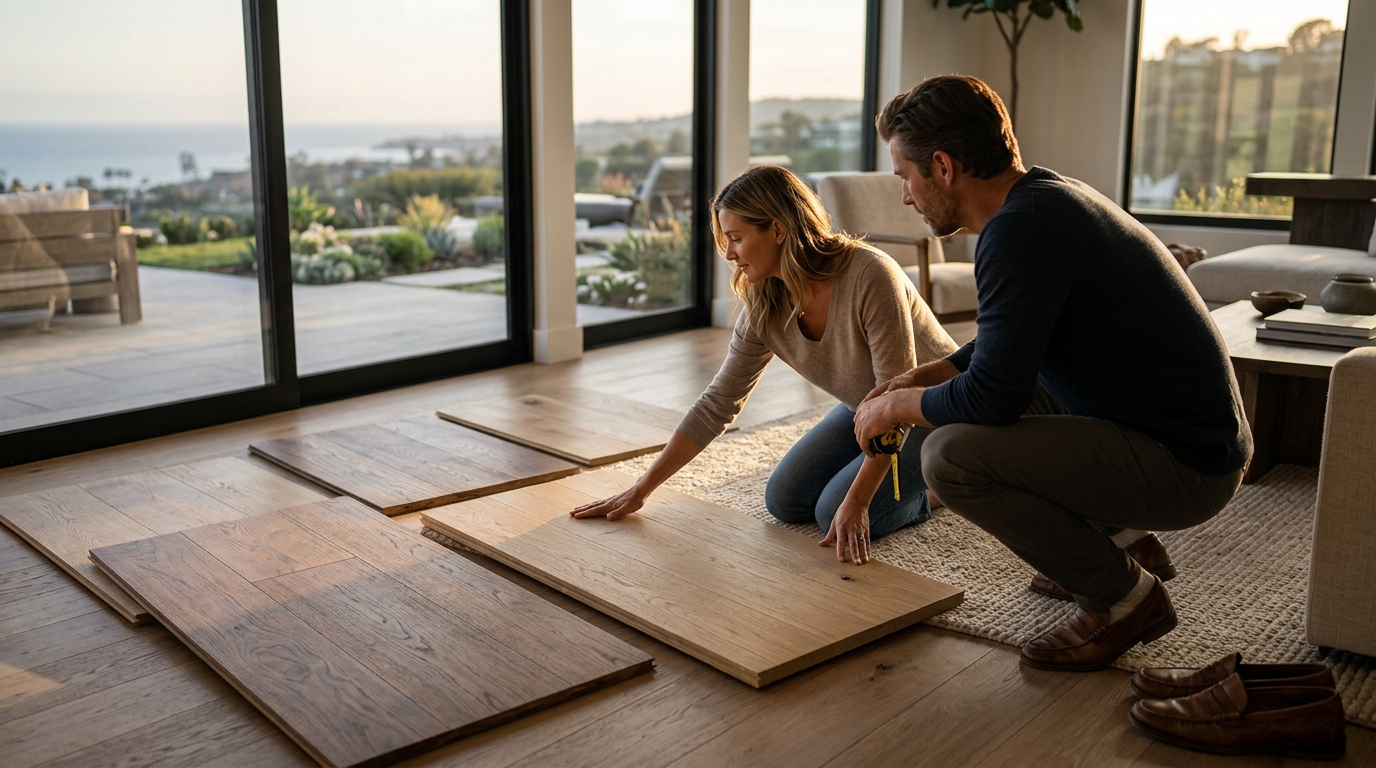
Homeowners in Orange County are increasingly prioritizing durable, high-value flooring solutions that withstand the region's unique climate. According to recent industry data, engineered hardwood installations have seen a 20% increase in demand across Southern California since 2022, driven by the need for stability in fluctuating humidity levels. This shift reflects a broader trend where homeowners seek materials that offer the aesthetic warmth of natural wood without the susceptibility to warping common in traditional solid planks. Understanding these material differences is critical for protecting your investment and ensuring long-term satisfaction with your home's interior design.
Solid vs. Engineered Hardwood
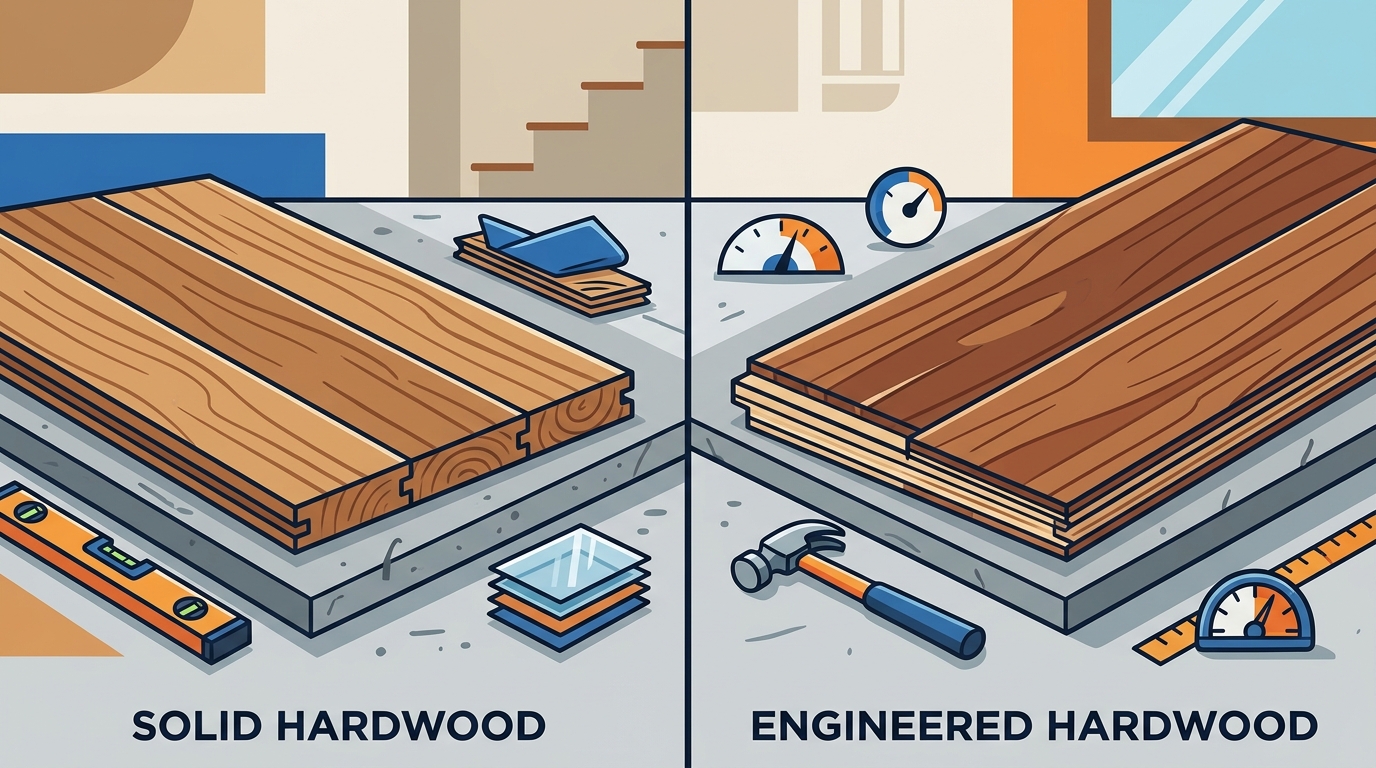
When selecting hardwood flooring, the first decision involves choosing between solid and engineered options. Solid hardwood is a single piece of natural wood milled from a log, offering the ability to be refinished multiple times over decades. This makes it a classic choice for homes that do not experience significant moisture fluctuations. However, solid wood is generally not recommended for basements or below-grade installations due to its tendency to expand and contract with humidity changes.
Engineered hardwood, by contrast, consists of a real wood veneer bonded over multiple layers of plywood or high-density fiberboard. This cross-grain construction provides superior dimensional stability, making it an ideal choice for the coastal climate of Huntington Beach and Newport Beach. It can be installed on concrete subfloors and in areas where solid wood might fail. For many Orange County homeowners, engineered hardwood offers the best balance of aesthetic authenticity and structural resilience.
Selecting the Right Wood Species
The species of wood you choose dictates the floor's hardness, color, and grain pattern. Oak remains the most popular choice in the region due to its durability and classic appeal. White oak has gained significant traction in recent years for its modern, neutral tones and superior resistance to moisture compared to traditional red oak. Maple offers a smoother, more uniform grain with a lighter appearance, while walnut provides a rich, dark contrast that adds dramatic elegance to any room.
Exotic species like Brazilian Cherry or Hickory offer extreme hardness ratings, making them suitable for high-traffic areas. However, these woods often come at a premium price point and may require more specialized finishing techniques. When selecting a species, consider the existing color palette of your home and the amount of natural light the room receives. Darker woods can make a space feel more intimate, while lighter woods can enhance the perception of square footage in smaller rooms.
The Installation Process
Professional installation is the cornerstone of a successful hardwood floor project. Improper installation can lead to gaps, squeaks, or premature wear, regardless of the quality of the materials used. At Divinity Flooring Services, we adhere to strict industry standards for subfloor preparation, ensuring a flat, dry, and stable base for your new floors. This step is critical because even minor imperfections in the subfloor can telegraph through the hardwood planks over time.
The installation method also plays a vital role in the floor's longevity. Glue-down installations are common for engineered hardwood, providing a secure bond that prevents movement. Nail-down methods are typically reserved for solid hardwood installed over wood subfloors. Floating installations, where planks are clicked together without adhesive or nails, offer flexibility and ease of replacement but may feel less solid underfoot. Our team evaluates your specific home structure to recommend the most appropriate installation technique for your needs.
Maintenance and Longevity
Hardwood floors are a long-term investment that requires consistent care to maintain their beauty. Regular sweeping or vacuuming with a hard-floor attachment prevents abrasive dirt and grit from scratching the finish. In Orange County, where sand and dust can be prevalent, frequent cleaning is essential to preserve the floor's luster. Spills should be wiped up immediately to prevent water damage, particularly for engineered hardwood where moisture can seep into the seams.
Refinishing is a key aspect of hardwood maintenance. Solid hardwood can be sanded and refinished multiple times, effectively renewing its appearance every 10 to 15 years. Engineered hardwood can also be refinished, but the number of times depends on the thickness of the top veneer. Our team provides expert guidance on refinishing schedules and techniques to ensure your floors remain in pristine condition for decades. Proper maintenance not only enhances the aesthetic appeal but also protects the structural integrity of the wood.
Hardwood Comparison Table
The following table summarizes the key characteristics of popular hardwood options to assist in your decision-making process.
| Wood Type | Hardness (Janka) | Best For | Refinishing Potential |
|---|---|---|---|
| White Oak | 1,360 | High traffic, modern aesthetics | High |
| Red Oak | 1,290 | Traditional styles, budget-friendly | High |
| Maple | 1,450 | Light colors, smooth grain | Medium |
| Walnut | 1,010 | Dark accents, luxury finishes | Medium |
| Engineered Oak | Varies | Coastal areas, concrete subfloors | Low to Medium |
Key Takeaways
- Engineered hardwood offers superior stability for Orange County's coastal climate compared to solid wood.
- White oak has become the preferred choice for modern homeowners due to its durability and neutral tone.
- Proper subfloor preparation is critical to prevent telegraphing and ensure long-term floor performance.
- Solid hardwood can be refinished multiple times, extending its lifespan significantly beyond engineered options.
- Regular cleaning and immediate spill management are essential to protect hardwood finishes from damage.
- Divinity Flooring Services provides a 5-year workmanship warranty on all installation projects.
- In-house teams ensure consistent quality and accountability throughout the entire installation process.
Frequently Asked Questions
Is engineered hardwood better than solid hardwood for Orange County?
Engineered hardwood is often recommended for Orange County due to its resistance to humidity fluctuations and ability to be installed on concrete subfloors, which are common in coastal homes.
How long does hardwood floor installation take?
Typical installation timelines range from 3 to 5 days for an average-sized home, depending on the scope of subfloor prep and the complexity of the layout.
Can I install hardwood over existing tile?
While possible, it is generally not recommended due to height differences and potential instability. Our experts usually advise removing existing flooring for the best results.
What is the Janka hardness rating?
The Janka hardness rating measures the force required to embed a steel ball into wood, indicating its resistance to wear and denting.
Do you offer free consultations?
Yes, Divinity Flooring Services offers free in-home consultations to assess your space and provide a detailed, no-obligation estimate.
How do I maintain my hardwood floors?
Regular sweeping, prompt spill cleanup, and periodic professional cleaning are the best ways to maintain your hardwood floors.
What warranty do you provide?
We provide a 5-year workmanship warranty on all our installations, ensuring peace of mind for our clients.
Start Your Hardwood Project Today
Transform your home with expert craftsmanship and premium materials. Contact Divinity Flooring Services to schedule your free in-home consultation and discover the perfect hardwood solution for your Orange County home. Visit our Flooring Installation page to learn more about our services.